How-to guide
Clearing clogs in low-flush toilets
Low-flush toilets save a lot of water. They also have bowls and outlets shaped in ways that trip up an old cup plunger.
What changed in the bowl
The federal standard for toilets is 1.6 gallons per flush, and many newer models use less. The EPA's WaterSense program puts it this way:
To clear the bowl with less water, toilet makers reshaped it. Many low-flush bowls have a narrow or oval outlet, and some have small jet holes that help push waste through. The same EPA page notes that some early low-flow toilets of the 1990s needed a double flush.
Design improvements have allowed toilets to use 1.28 gallons per flush or less while still providing equal or superior performance. This is 20 percent less water than the current federal standard of 1.6 gallons per flush.
Why a flat cup struggles
A cup plunger needs a round, flat rim around the outlet to seal against. An oval outlet leaves gaps at each end, and water squirts out sideways instead of going down the pipe. Jet holes near the outlet give the push another way out.
Owners of newer bowls describe the same scene: a plunger that worked fine on their old toilet rocks and sprays on the new one. The clog isn't harder. The plunger just can't hold a seal on that shape.
What the funnel nose does
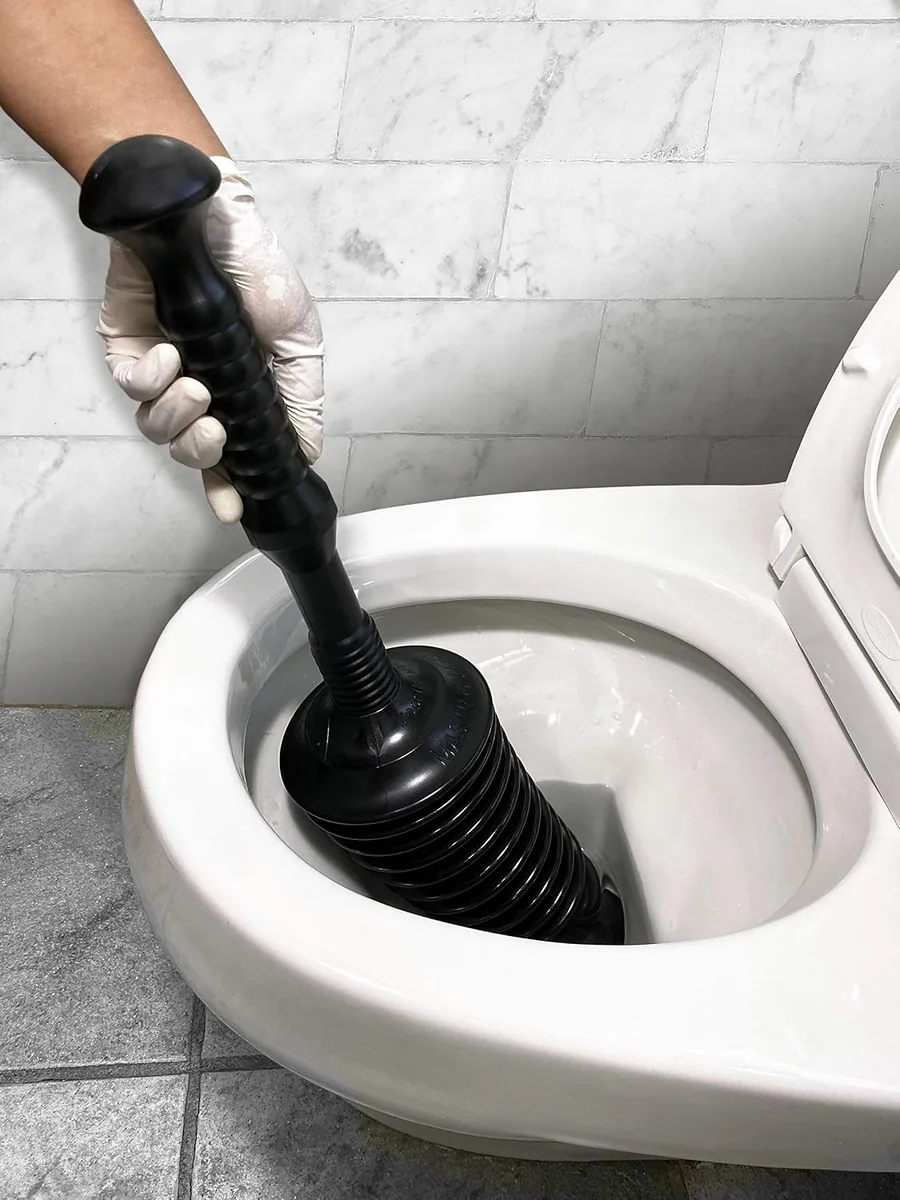
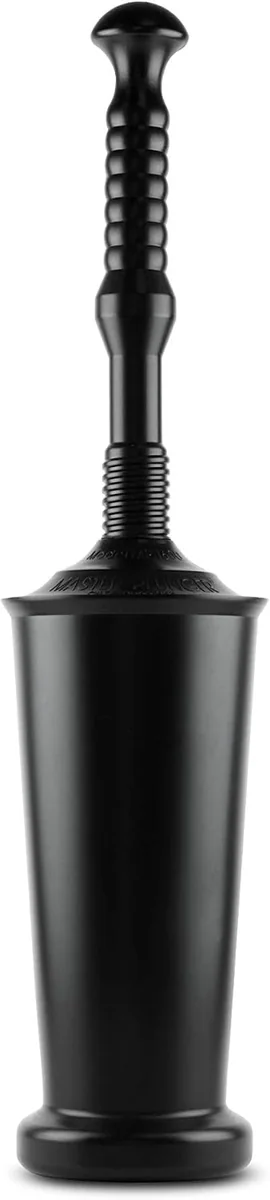
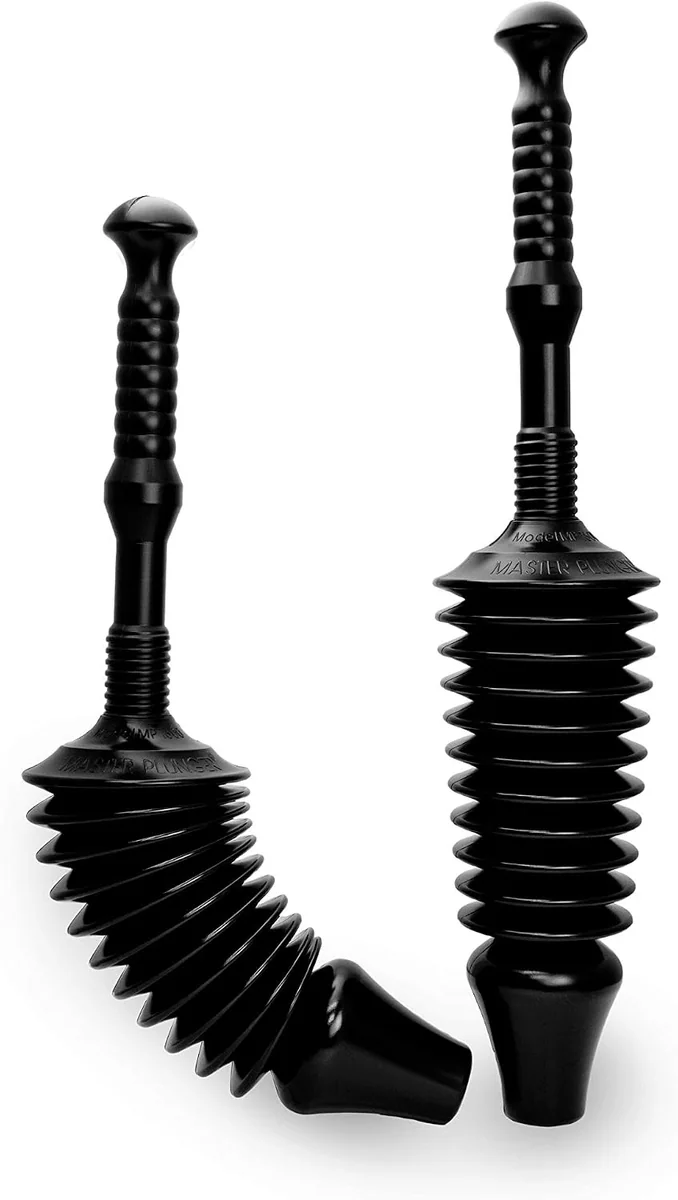
The MP1600's extended funnel nose goes into the outlet instead of sitting on top of it. It bends 90 degrees, so it follows the curve into standard and elongated bowls.
Behind the nose, the bellows move 8 cups of water on each stroke. With the nose inside the opening, more of that water goes into the trap and less comes back around the edges.
The seal still isn't perfect on every bowl. One owner found the hard nose didn't seal on their toilet, and another called the seal imperfect but good enough to get the job done.
Step by step on a low-flush bowl
Close the shutoff valve and lay towels down. Make sure water covers the nose, and bail some out if the bowl is near the rim.
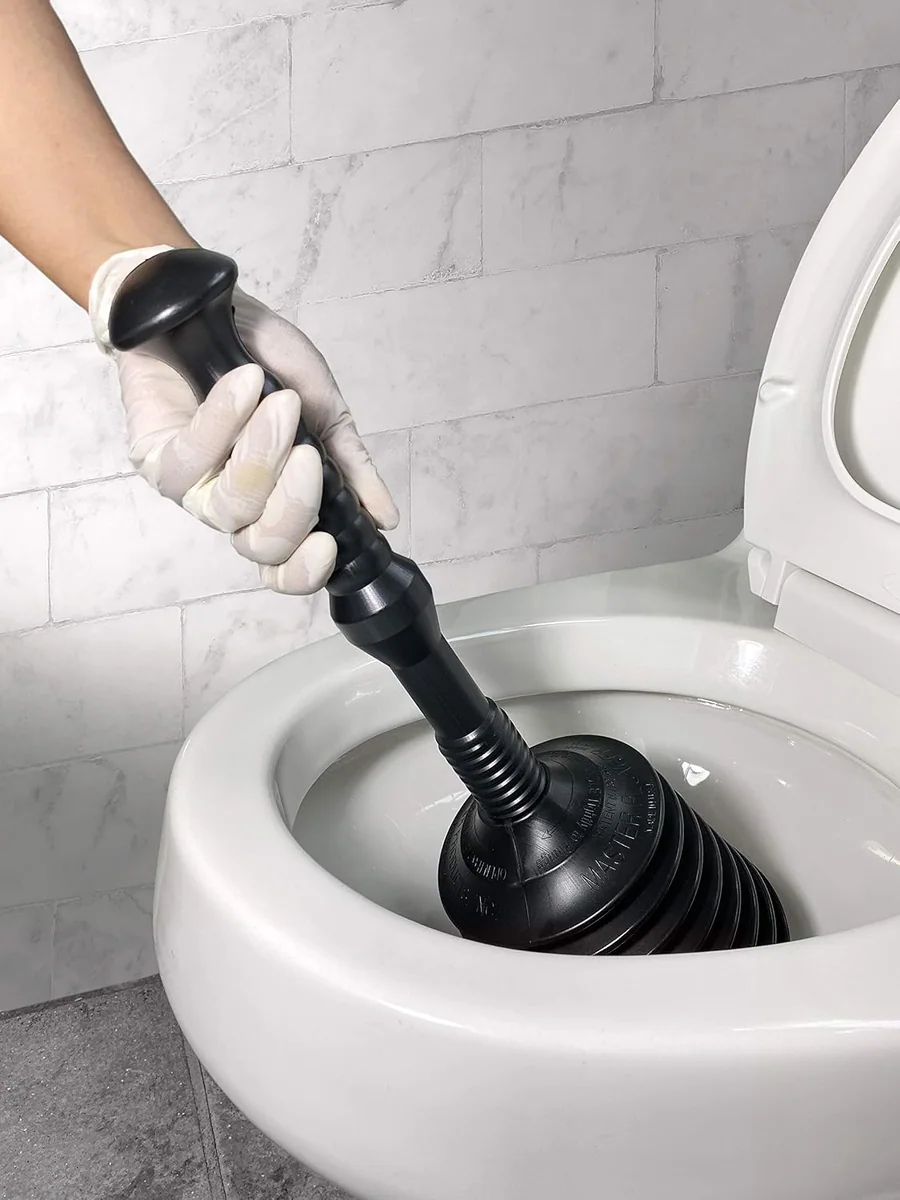
Push the nose past the opening you can see, until it sits where the outlet narrows. Press slowly the first time to let the air out. Owners who got sprayed on the first try had usually pushed hard with the bellows still full of air.
Then draw water into the bellows and work steady push-pull strokes, starting slow and building speed. After 15 to 20 strokes, lift out and watch the level. Open the valve and flush once, with your hand near it in case the water climbs.
Fewer clogs next time
Use less paper per flush, and flush twice for a heavy load. Put wipes in the trash, even the ones sold as flushable.
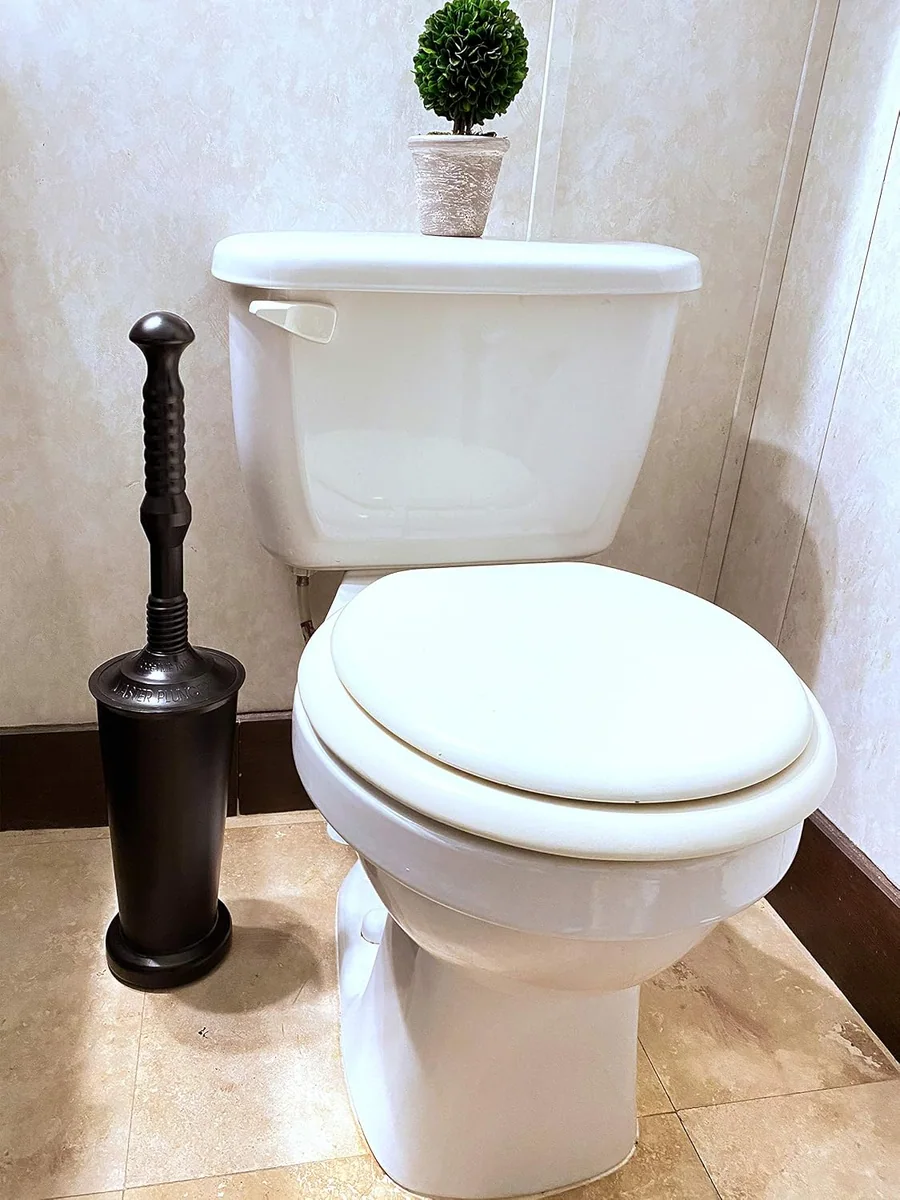
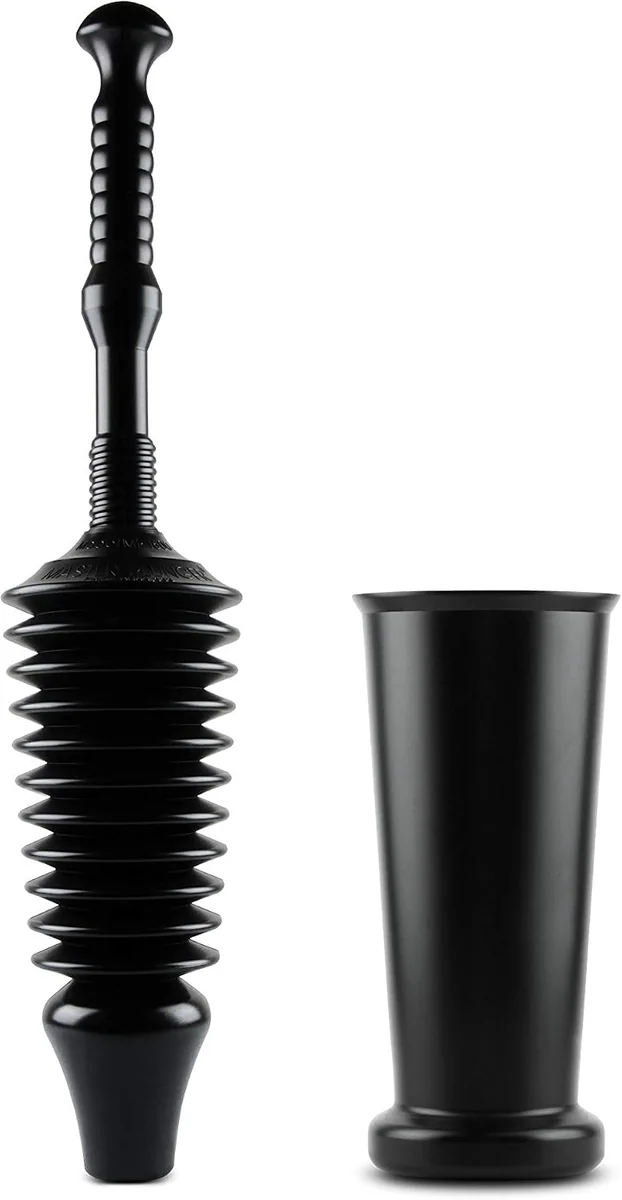
Keep the plunger in the bathroom where the low-flush toilet is, not in the garage. A funnel-nose plunger that stands in a bucket next to the bowl gets used in the first minute, before anyone tries a second flush. That first minute decides whether you mop the floor afterward.
If one toilet in the house clogs far more than the others, the cause may be in its drain line and not in how it's used. That's worth a plumber's visit before it turns into a flood.
When to call a plumber
Call if water comes up in a tub or shower when you plunge, or if three rounds of strokes don't move the level. Call too if something solid went down, since plunging only pushes it deeper.
A plumber can run a toilet auger past the trap without pulling the toilet off the floor. On an oval low-flush outlet that often reaches a clog the plunger has only been rocking back and forth.
And don't plunge a bowl that has chemical drain cleaner in it. The splash can burn, and a plumber needs to know it's there before opening the line.
Models this guide mentions
MP1600
Master Plunger 1600
For 1.6-gallon low-flush toilets
- 8 cups
- Air relief valve
- Extended funnel nose
- 2 options
from$15.99
See options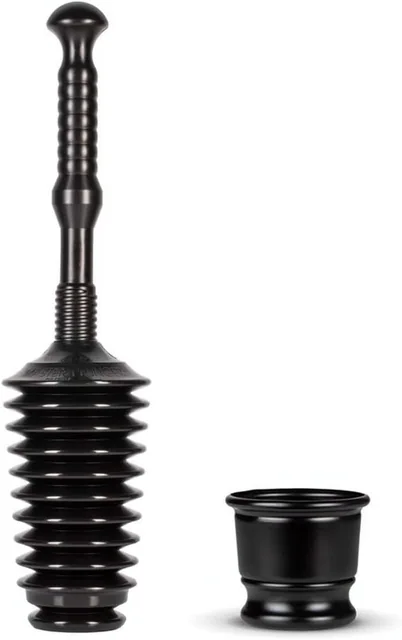
MP500
Master Plunger 500 Kit
All-purpose plunger with a bucket
- 8 cups
- Air relief valve
- Tri-level nozzle
- 4 options
from$15.77
See options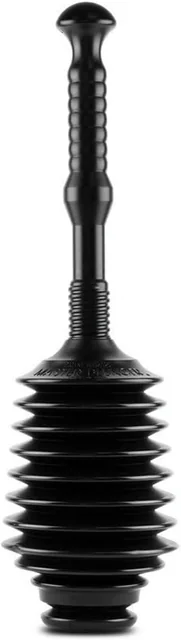
from$15.49
See optionsPublished 28 September 2026. Outside sources were read on the date shown with each quote. See all sources.