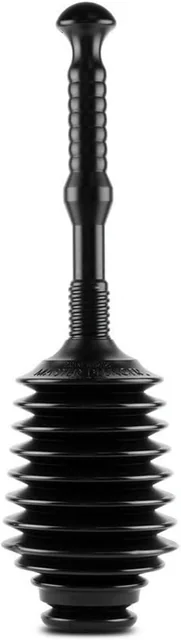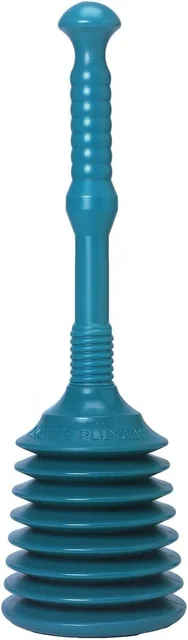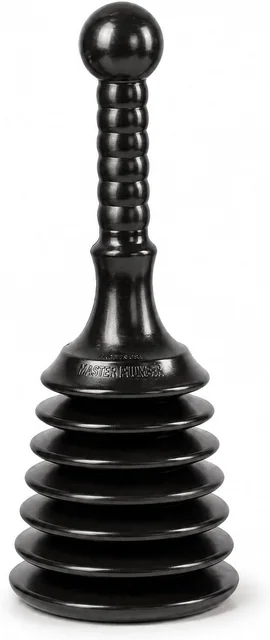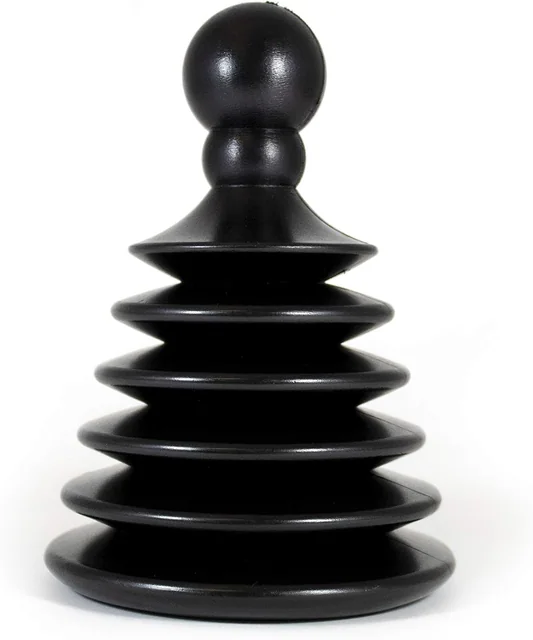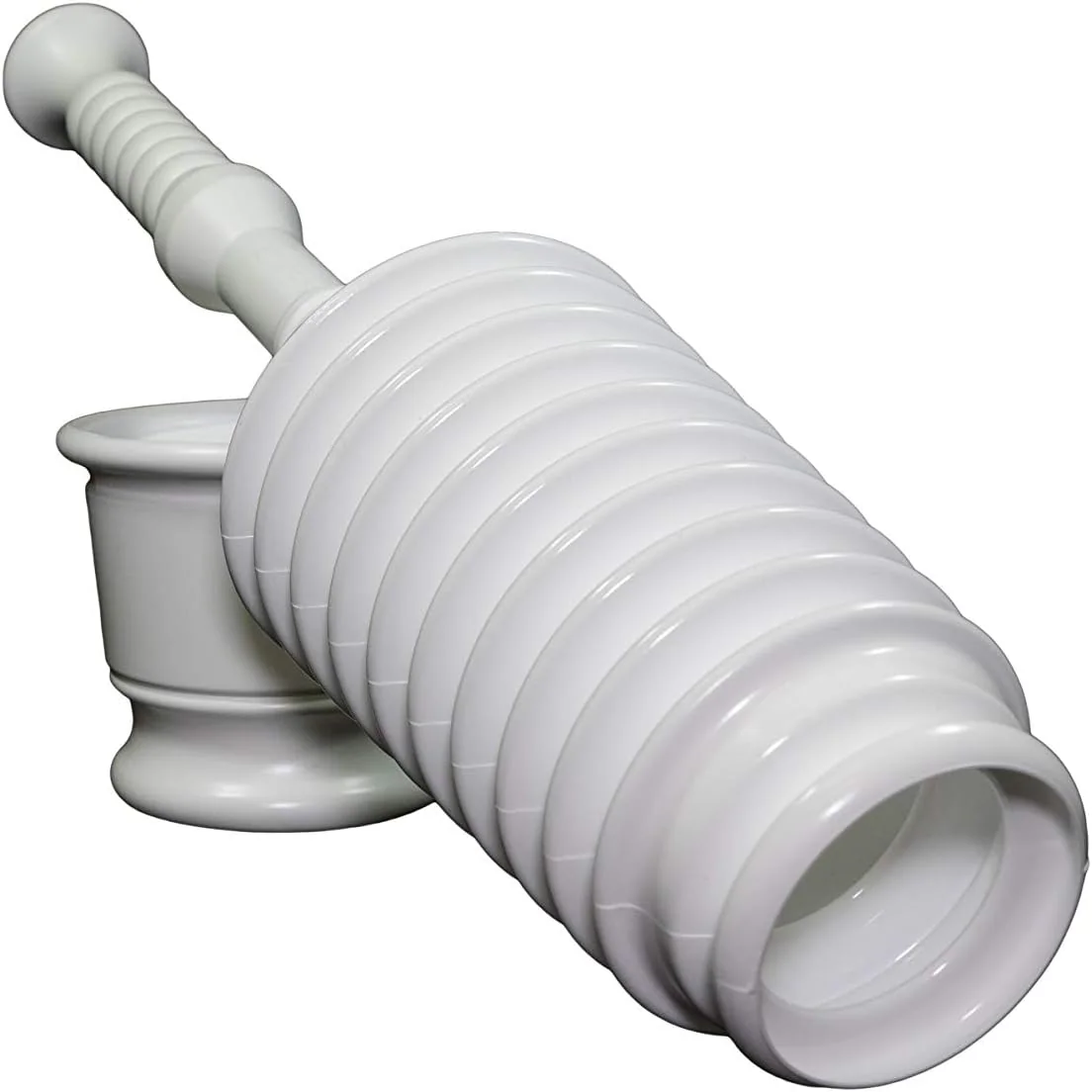
Bellows body
The folds close and spring back, so each stroke pushes water into the drain and then pulls it back. Rinse and shake them out after each use, since waste can sit between the folds.
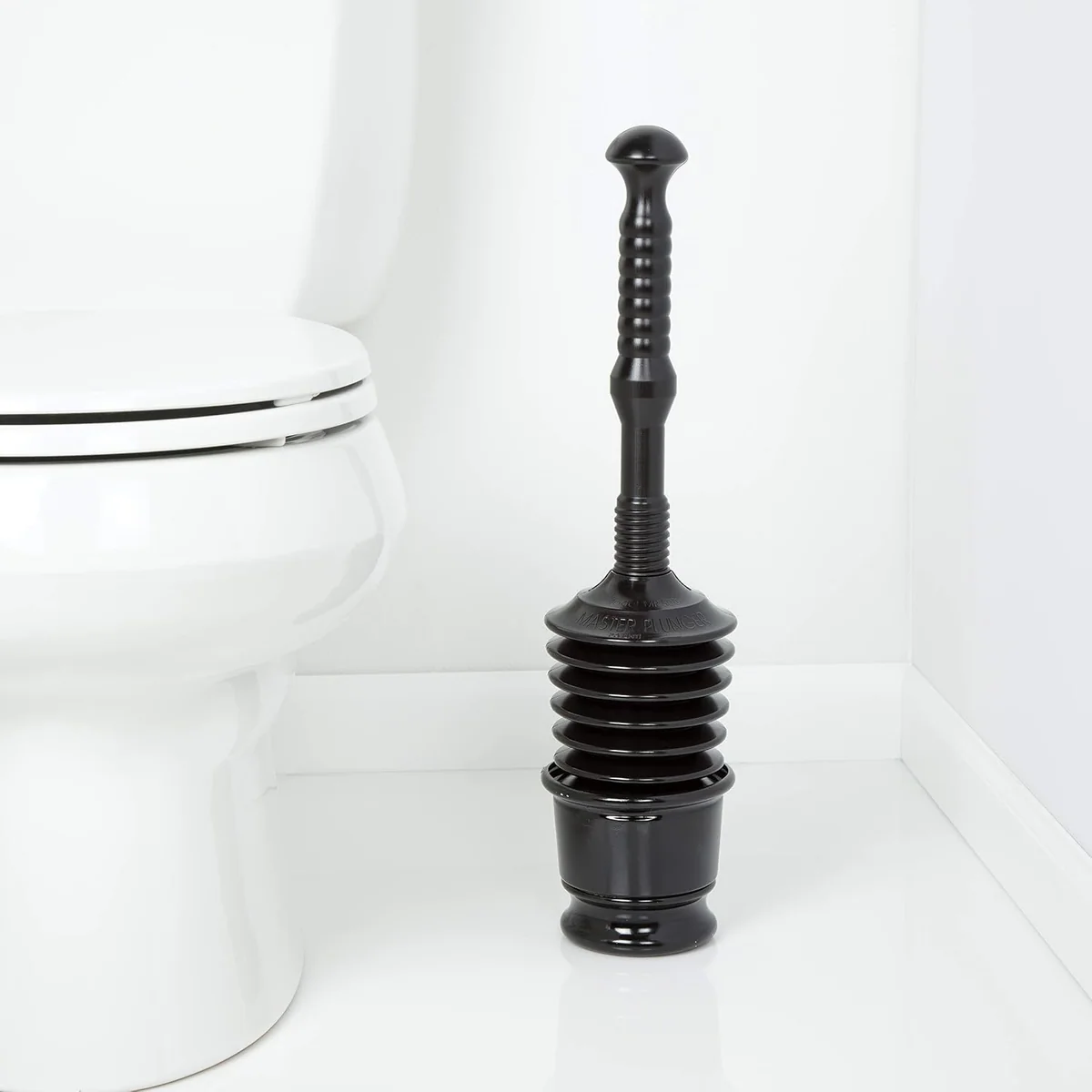
Master Plunger bellows plungers
Master Plunger bellows plungers push a set load of water into the drain on every stroke, from the 7.25-inch Mighty Tiny to the 10-cup MP100. Tell us where the clog is and you'll see which one fits your drain.
Pick the room, then what the drain is doing. Each answer names the plungers that suit it, best fit first.
Push per stroke
Each bellows model is rated by how many cups of water it moves on one full stroke. More cups means a bigger push down the pipe, but also a bigger plunger to store and a bigger splash if you rush.
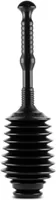 Master Plunger 100The big toilet plunger10 cupsfrom $15.49
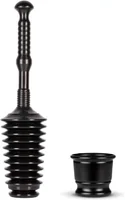 Master Plunger 500 KitAll-purpose plunger with a bucket8 cupsfrom $15.77
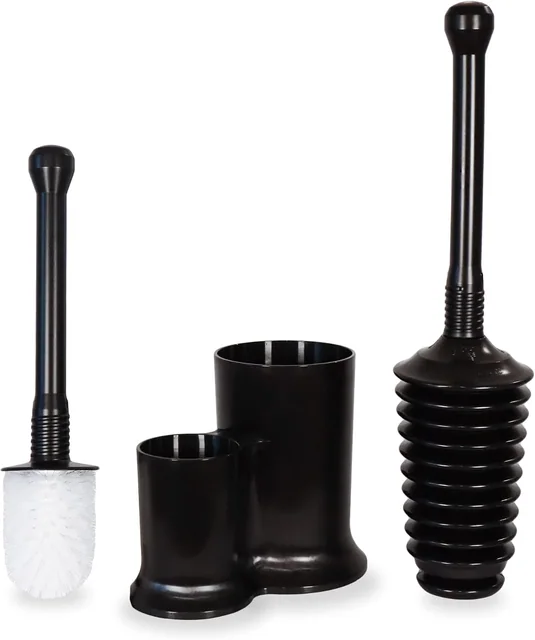
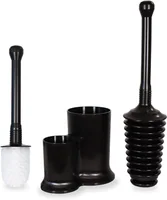 Master Plunger 500 & Brush SetPlunger, toilet brush and a shared holder8 cupsfrom $29.95
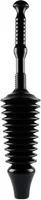 Master Plunger 1600For 1.6-gallon low-flush toilets8 cupsfrom $15.99
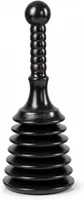 Master Plunger ShortyShort sink and drain plunger4 cupsfrom $11.99
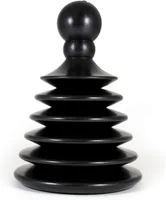 Mighty TinyPocket plunger for pop-up sink drains and RVs2¼ cupsfrom $12.99
Inside a Master Plunger
The folds close and spring back, so each stroke pushes water into the drain and then pulls it back. Rinse and shake them out after each use, since waste can sit between the folds.
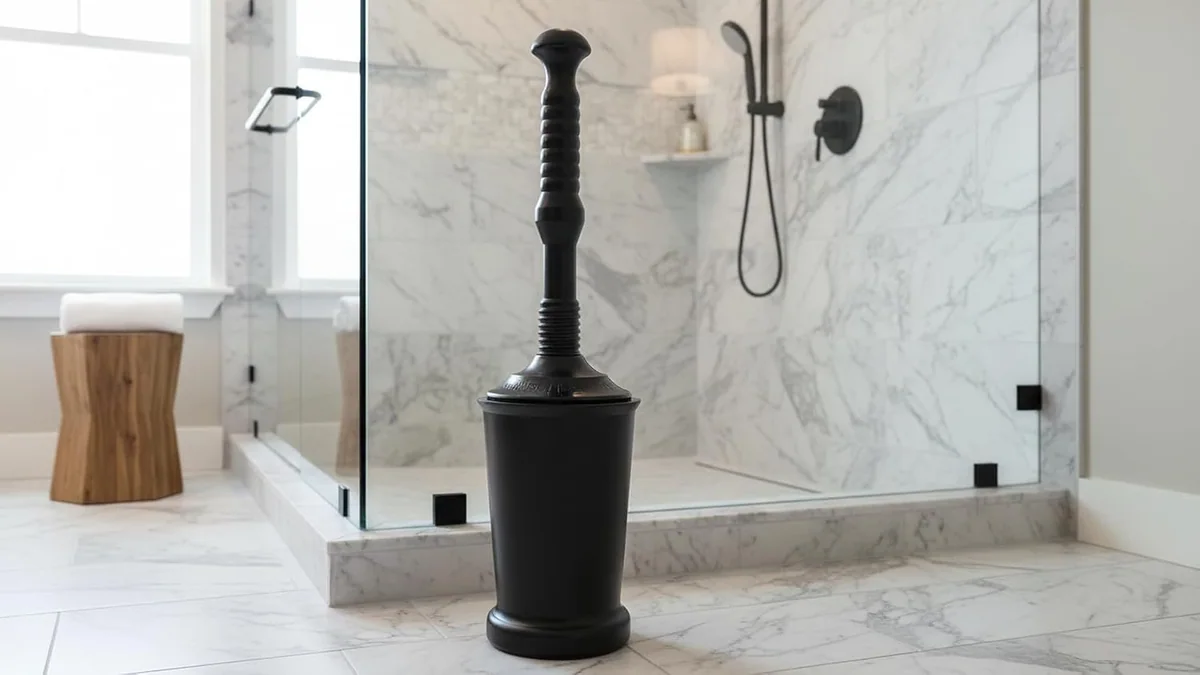
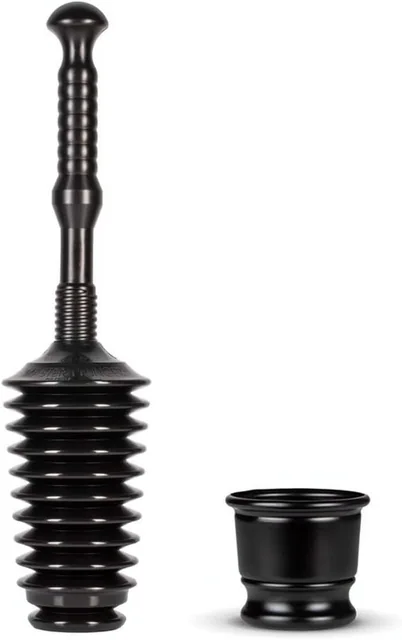
The MP500 Kit and the MP1600 with tall bucket come with a bucket to stand the plunger in. Drips stay in the bucket, and you're not hunting for the plunger when the bowl is rising.
Air trapped in the bellows is what throws a full bowl over the rim. On the toilet models the valve lets that air out as you press, and on the MP500 you open it with a quarter turn of the handle.
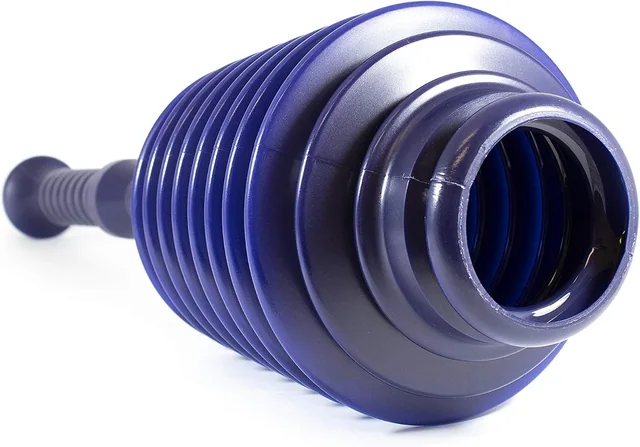
The MP100 and MP500 end in a stepped tip that sits down in the drain opening. The maker says it gives a better seal in kitchen sinks and toilets.
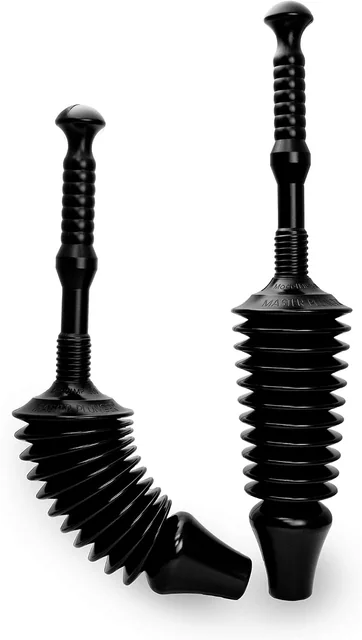
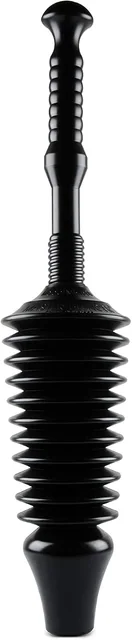
The MP1600 has a long nose that bends 90 degrees into the outlet of standard and elongated bowls. It's built for 1.6-gallon low-flush toilets, where a flat cup slides around.
The range
One row per model. Color, bucket and pack size are picked on the model page.
from$15.49
See optionsMP500
All-purpose plunger with a bucket
from$15.77
See optionsMP500-C5
Plunger, toilet brush and a shared holder
from$29.95
See optionsMP1600
For 1.6-gallon low-flush toilets
from$15.99
See options$15.99
See optionsfrom$11.99
See optionsfrom$12.99
See optionsClogs by room
In owners' words
Word for word, the good with the bad. Across the range, buyers have left 12,533 scores, counted once per model family.
This plunger does a great job in relieving clogs in a low flow toilet but beware that is needs to suck up water into the plunger first so you can agitate the clog. It fits well into the large opening though you may have to nudge it in past the opening you see and into where it narrows deeper in the drain. Start slow and increase velocity so you don't spray. DO NOT try to use this plunger like you would with traditional plungers unless you want a brown shower!
Ode to a Plunger (apologies to John Keats)My back aches, and a drowsy numbness painsMy arms, as though of clogs I had struck,Or emptied some grey water from the drainsOne minute past, and clogs had unstuck:`Tis not through envy of thy plastic formBut being too easy in relieving pains, --That thou, plum-bodied Savior of the pipeIn some amusing conspiracyHas shaken me from the wood-handled typeSingest of plumbling in full-throated ease.
I only bought this because the color matched my bathroom decor. It was a waste of money.There are far better, more efficient alternatives that all cost less. This thing may be good for deep water. Too bulky for regular toilet clogs.It’s big and the pleated part at the bottom can and does get toilet waste all in between it- yuk.The few times I had to use this, I was disappointed. Just buy a regular plunger, this is a waste.
Most of the time when I've got a clog in the sink or the toilet it's a product like this one that ends up fixing the situation. Maybe i'm just squeamish about such things but I don't care for the idea of using the same plunger in the sink and the toilet (ewwwwwww). I bought this one because of the color and it will live under the kitchen sink for use in the sink and the old black one gets relegated to the toilets from now on.
Indespensible under the kitchen sink. Two pack gives you the flexibility to keep one for the kitchen and one for the bathroom. (Sink only, I still use the full size plunger for the toilet.) The two pack is also handy for dual basin sinks when the clog is below the join, easier then trying to cover the other drain with your hand. The greater amount of air/water moved also seem to be more effective than a standard plunger.
It didn't work very easily. I had another one in the past that spelled much faster and better.
About the range
A plunger is the tool nobody thinks about until the water is at the rim. At that moment you want one that works on the first try. Master Plunger bellows plungers are shaped for one job: push water, not air, and push enough of it to move the clog.
A flat rubber cup traps a pocket of air, and air squeezes, so part of every push goes into the cup. Our bellows plungers fill with water, and pressing down sends that water into the drain in one solid push. Pull up and they draw it back, so you work the clog from both sides.
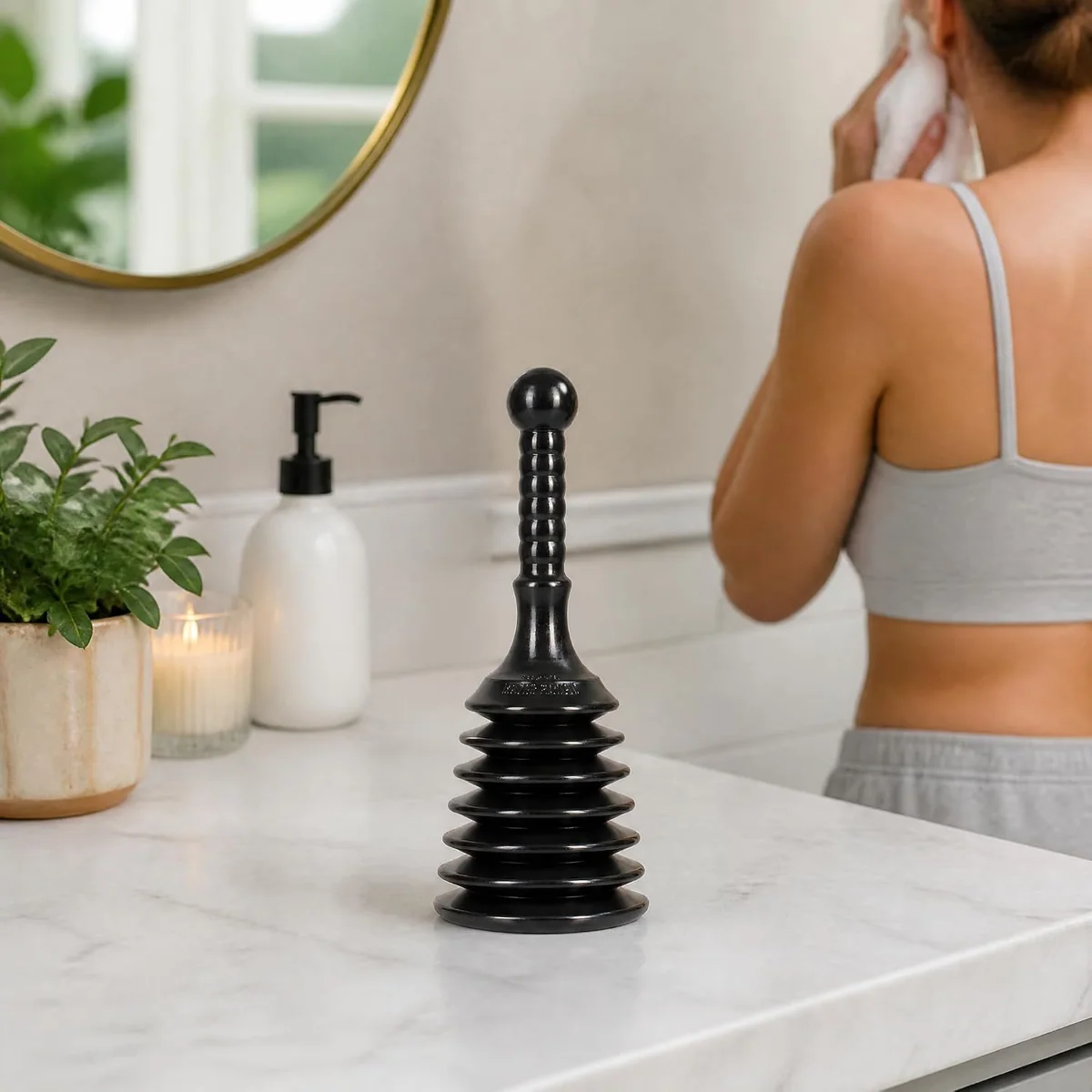
The lineup runs from the Mighty Tiny, 7.25 inches tall with 2 1/4 cups of water, to the Master Plunger 100 at 10 cups. In between sit the 4-cup Shorty and three 8-cup models for toilets. The wide-mouth MP200 stands apart, shaped for tubs, showers and floor drains.
Bigger is not always better. A 10-cup plunger in a bathroom sink sprays water out of the overflow before it clears anything, and a 2 1/4-cup plunger won't shift a wad of paper in a toilet. Pick by the drain first, then by the size of the clog.
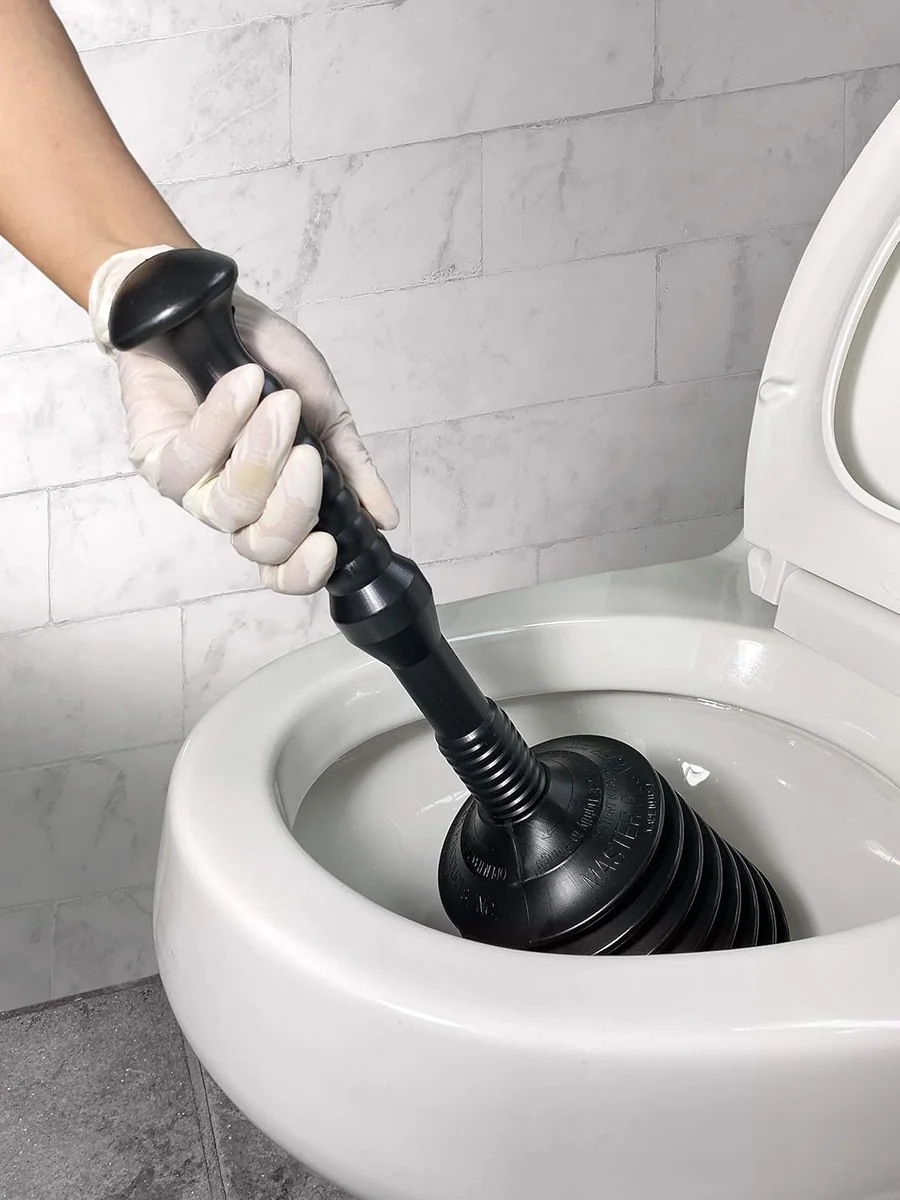
The part people ask about most is the air relief valve on the toilet models. Press slowly on the first stroke and the trapped air leaves through the valve instead of pushing bowl water onto your floor. On the MP500 a quarter turn of the handle opens it, and you close it again once the air is out.
Newer toilets use 1.6 gallons a flush or less, and many have a narrow or oval outlet. A flat cup rocks on that shape and leaks around the edge. The MP1600 answers it with a long funnel nose that bends down into the outlet.
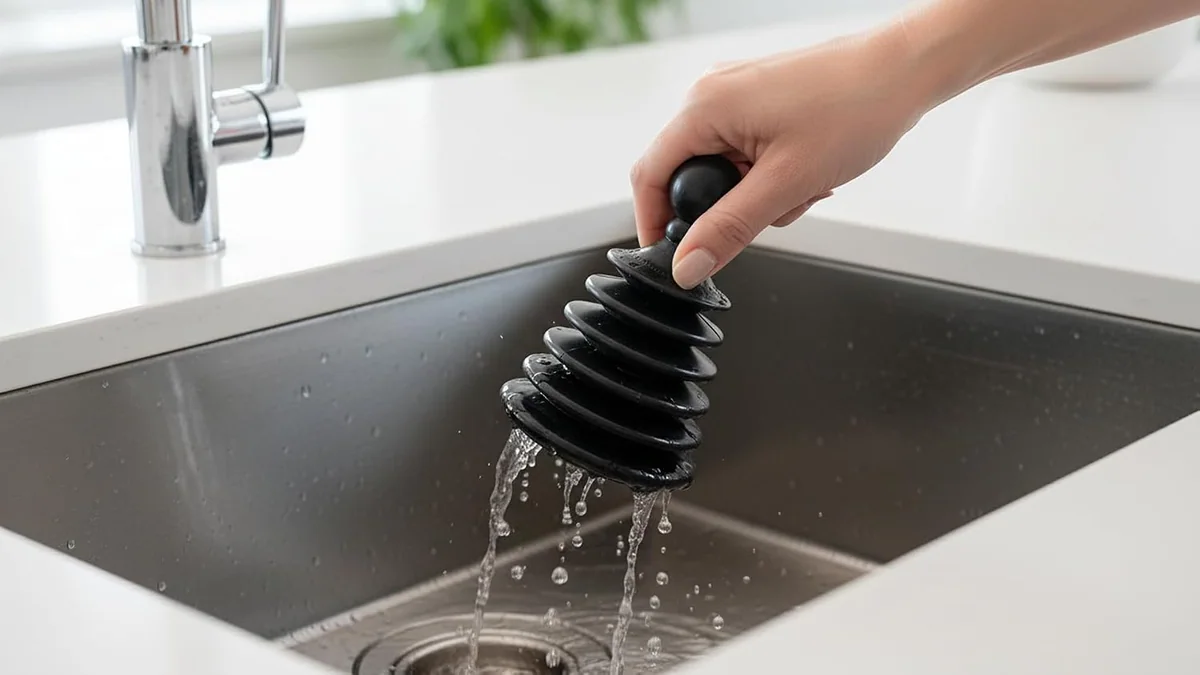
Our plungers are hard plastic with no rubber rim. That's what lets the folds spring back, but it also means you have to seat them with care, and some owners find them stiff at first. If you want a soft cup that forgives a sloppy angle, a bellows plunger may not be the tool for you.
Most homes end up with two: a toilet model in the bathroom and a short one under the kitchen sink. That keeps the toilet plunger out of the kitchen, and it means the right size is already in the room when the water starts rising. If you only have space for one, start with the drain that gives you trouble most often.
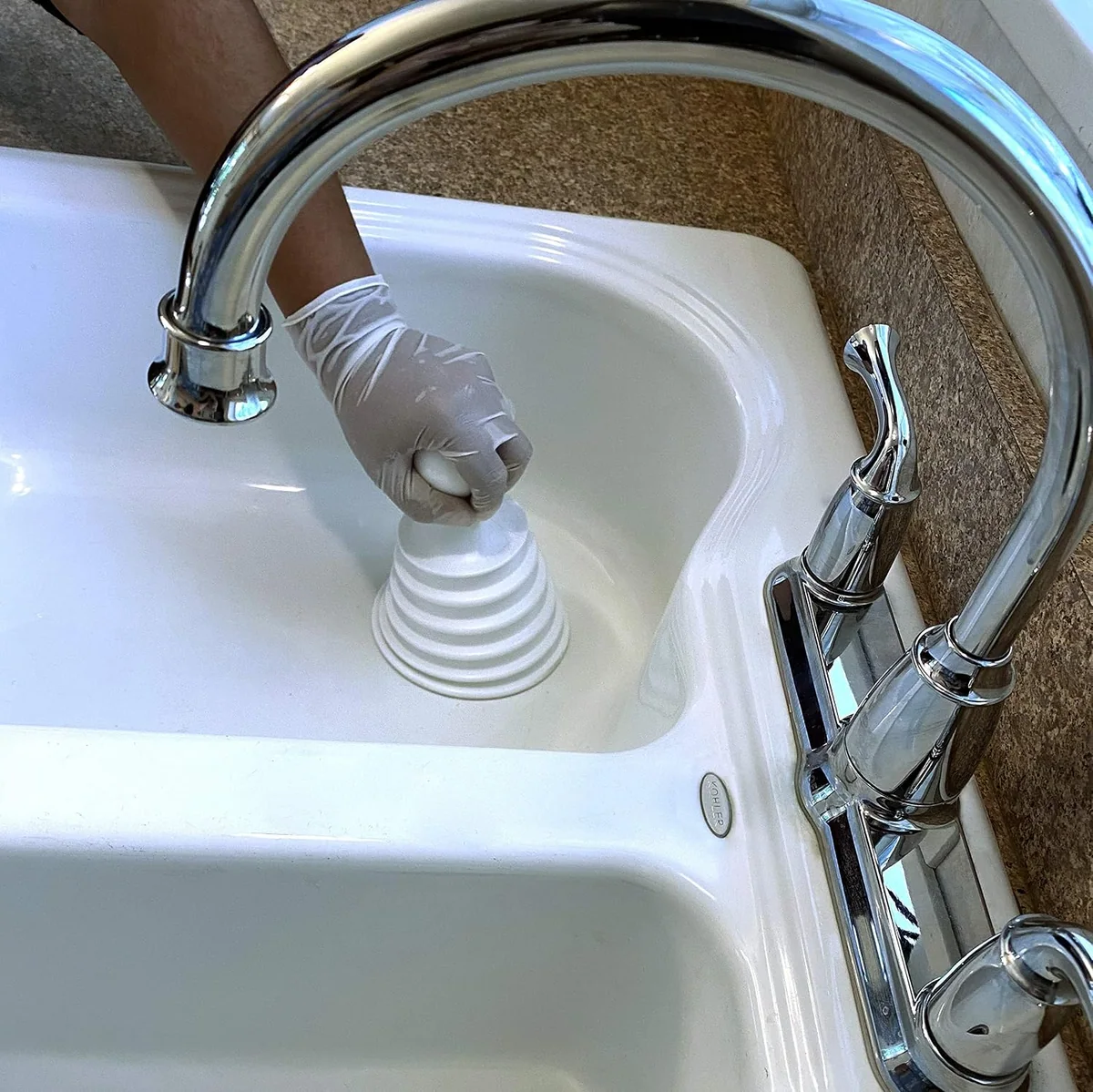
No hand plunger reaches a blocked sewer line, a toy stuck in the trap or a pipe full of roots. If water comes up in a second drain when you plunge, or three rounds of strokes change nothing, stop and call a plumber. And never plunge a drain that has chemical cleaner in it.
The Master Plunger range comes from G.T. Water Products, and the maker says the plungers are made in the USA. The stars on our 7 models come from 12,533 owner ratings in all. On each model page you'll find the cups, the drains it suits and the drains it doesn't.
FAQ
It's the amount of water a bellows plunger moves on one full stroke. The Mighty Tiny moves 2 1/4 cups and the MP100 moves 10, so the bigger number means more water hitting the clog each time you push.
The bellows were full of air when you pushed. Press slowly on the first stroke so the air leaves through the valve, and check that the handle is screwed in firmly.
On the MP100 the directions are printed on the rim of the bellows. They're small, so read them before the day you need them.
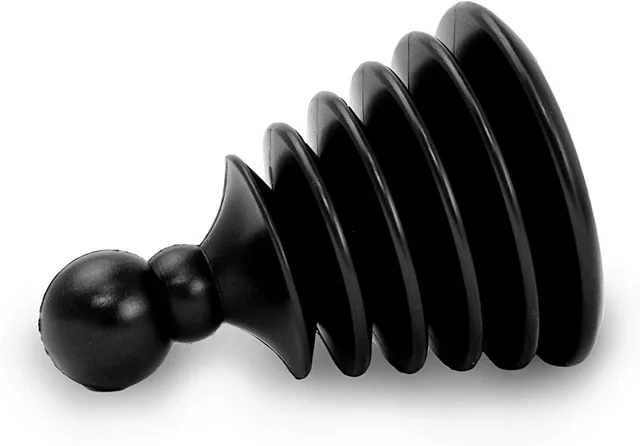
You can, and the MP100 and MP500 have a nozzle shaped for both. Most people keep a separate short plunger for sinks, since nobody wants the toilet plunger in the kitchen.
No. Plunging throws water back up at you, and with caustic cleaner in it that water can burn skin and eyes. Tell a plumber what you poured in and let them open the line.
Try two or three rounds of 15 to 20 strokes, checking the water level between rounds. If nothing moves, or water rises in another drain, the blockage is past a plunger's reach and it's time for a plumber.