How-to guide
How to plunge a toilet without a mess
A clogged toilet is a small problem that turns into a wet floor fast. Here's how to clear one with a bellows plunger, in the order a plumber would do it.
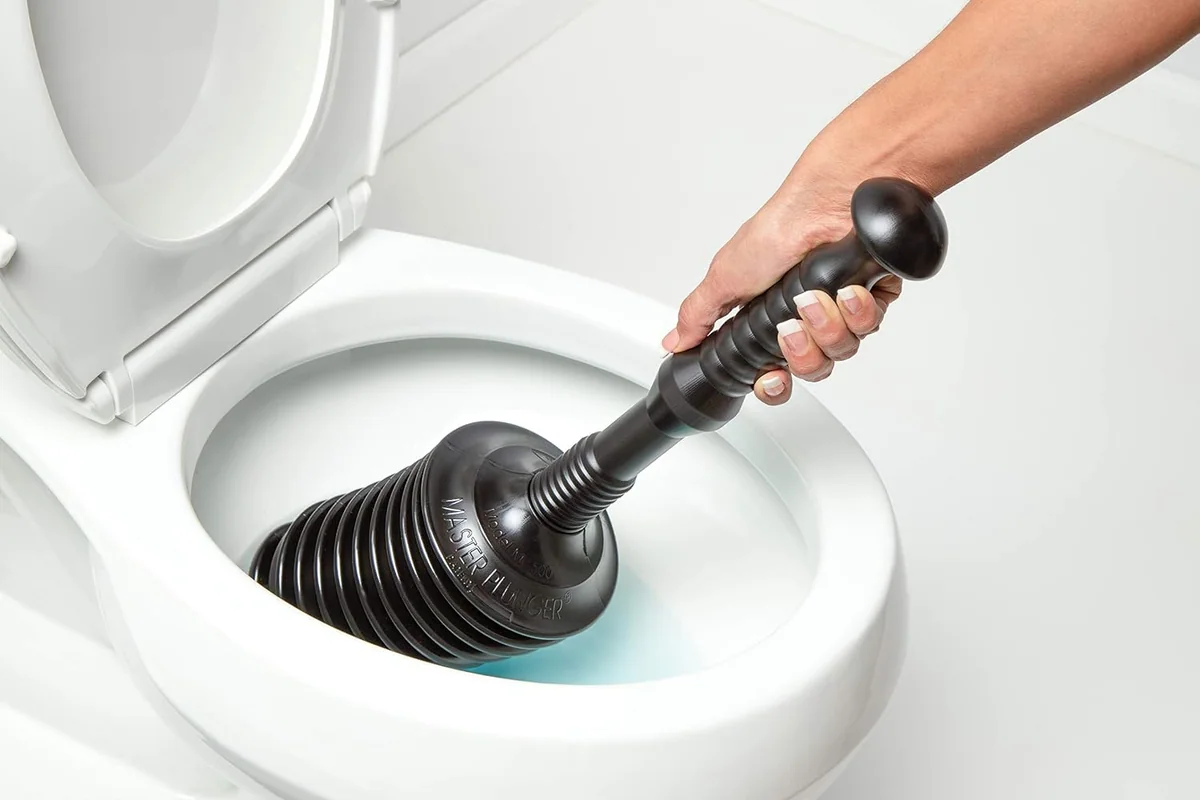
Stop the water first
The worst move is a second flush. If the bowl is already high, another flush only adds water that has nowhere to go.
Reach behind the toilet and turn the shutoff valve clockwise until it stops. Lay towels around the base and put on rubber gloves. Keep a bucket close in case you need to bail.
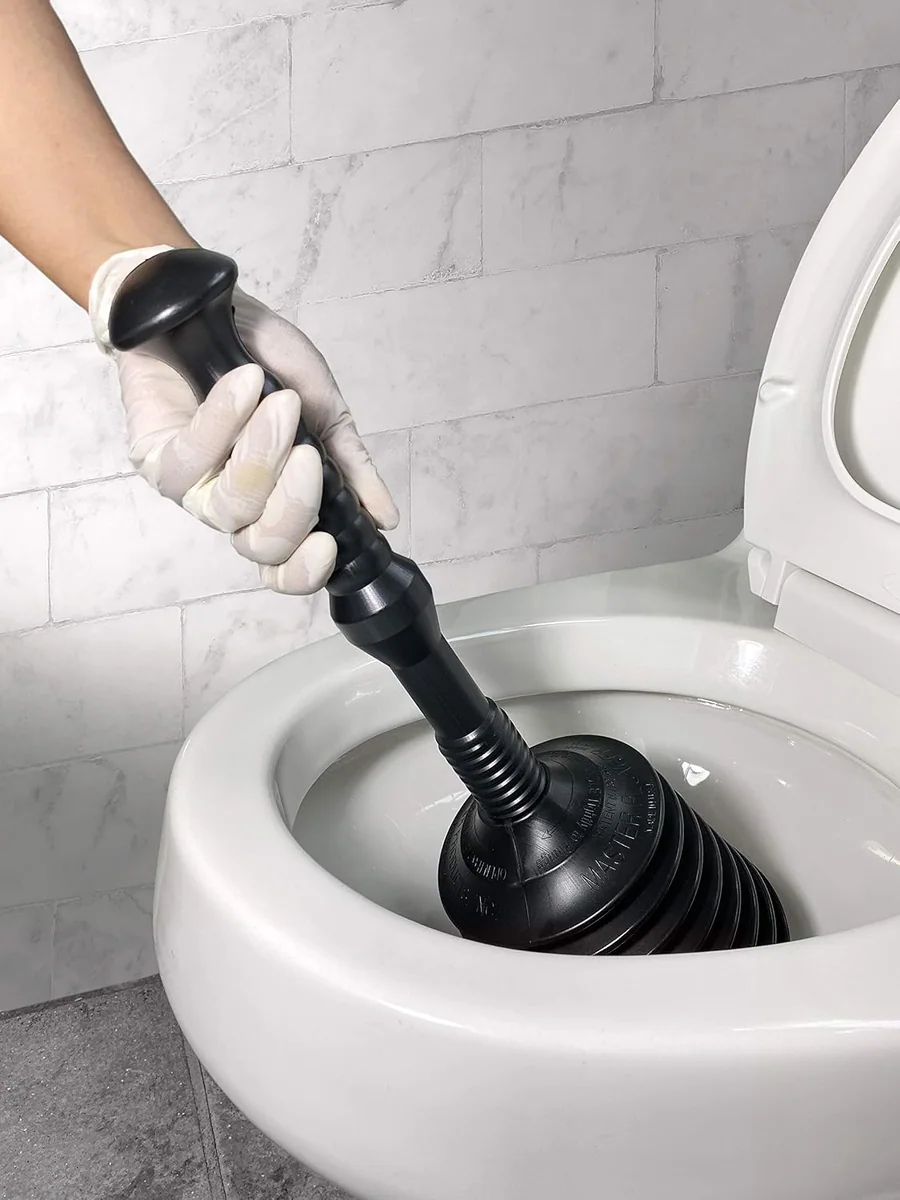
Set the water level
A bellows plunger works by moving water. It needs enough in the bowl to cover the nose, and enough room under the rim that a push doesn't send water over the edge.
If the bowl is full, bail some into the bucket. If it's low, pour in water from a jug until the nose will sit underwater. About half full is the level you're after.
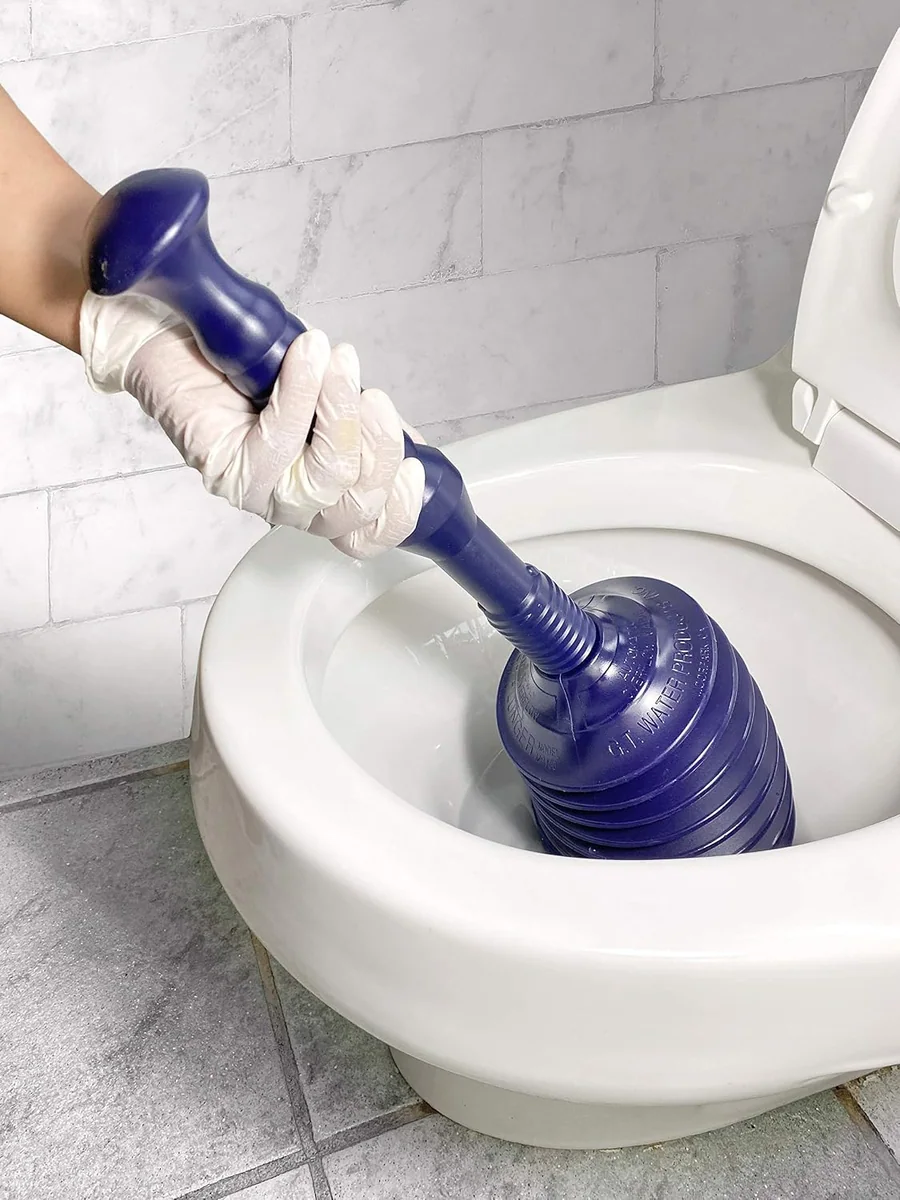
Seat the nose and let the air out
Put the nose into the outlet at the bottom of the bowl. On the MP100, MP500 and MP1600 the tip is shaped to go into that opening, not just rest over it.
Now press down slowly. The bellows start out full of air, and a fast first push drives that air into a sealed bowl, which is how water ends up on the floor and on you. The air relief valve lets it out as you press, and on the MP500 you open it with a quarter turn of the handle, then close it once the air is gone.
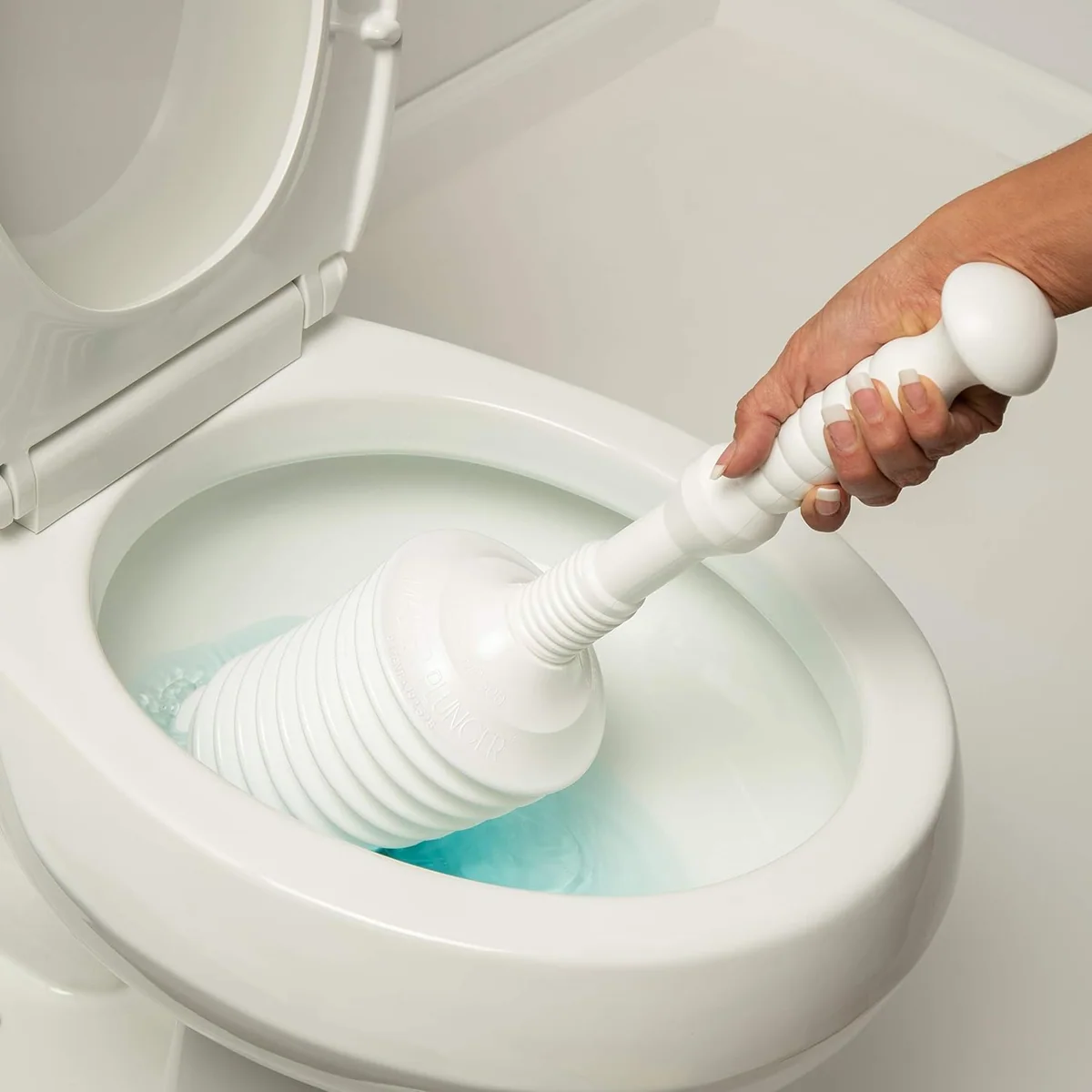
Work the strokes
Pull up to draw water into the bellows, then push down firmly to send it into the trap. The pull matters as much as the push, because it rocks the clog back and forth until it breaks up.
Keep a steady rhythm for 15 to 20 strokes without lifting the nose out of the outlet. Then pull the plunger away and watch the bowl. If the level drops, the clog has moved.
Open the shutoff valve and flush once, with your hand near the valve in case the water climbs. If the bowl drains slowly, do another round.
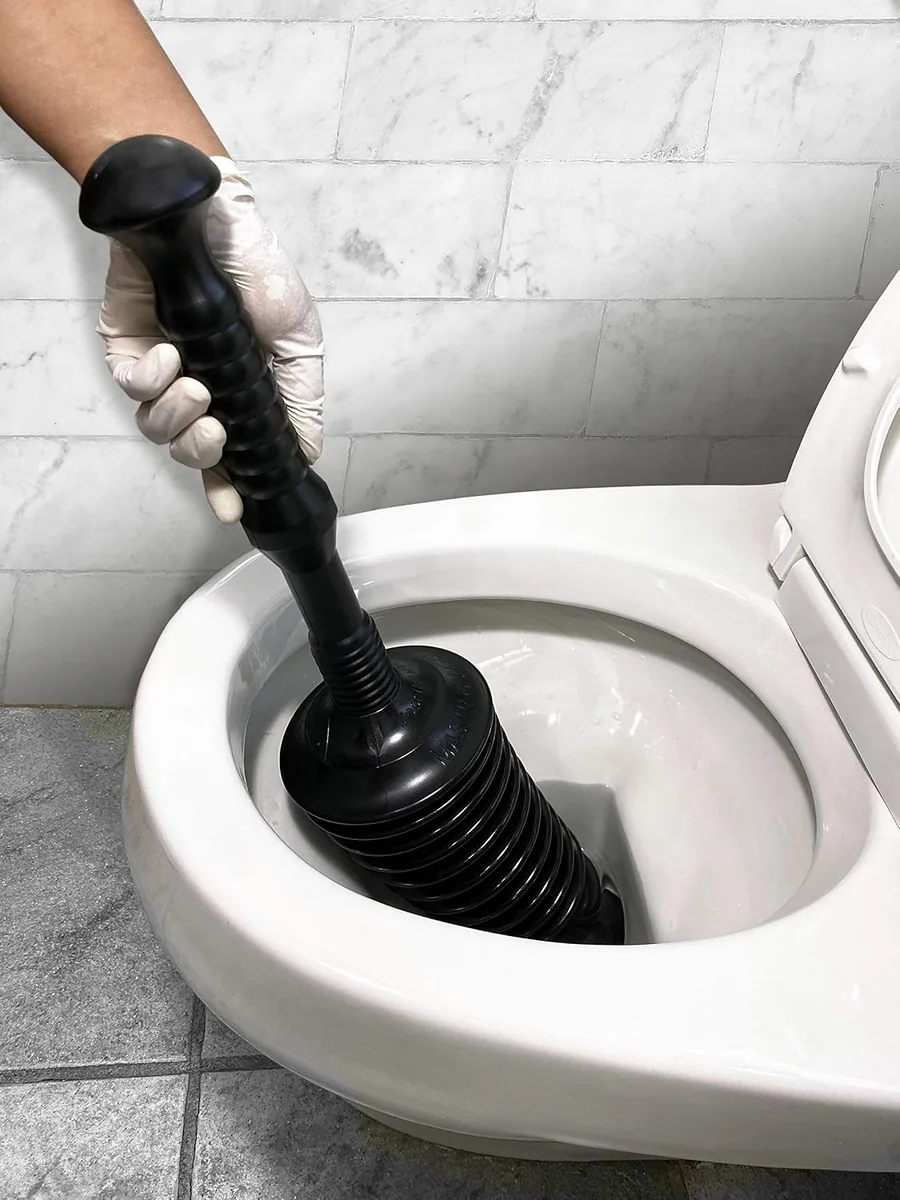
If it splashes
Splashing almost always means air. Either the first press was too fast, or the handle isn't screwed in far enough and air is bleeding out at the joint. Start over with a slow first stroke.
Some bowls have an oval or narrow outlet that a round tip won't fill. If the nose keeps slipping, the long funnel nose on the MP1600 goes deeper into that kind of outlet.
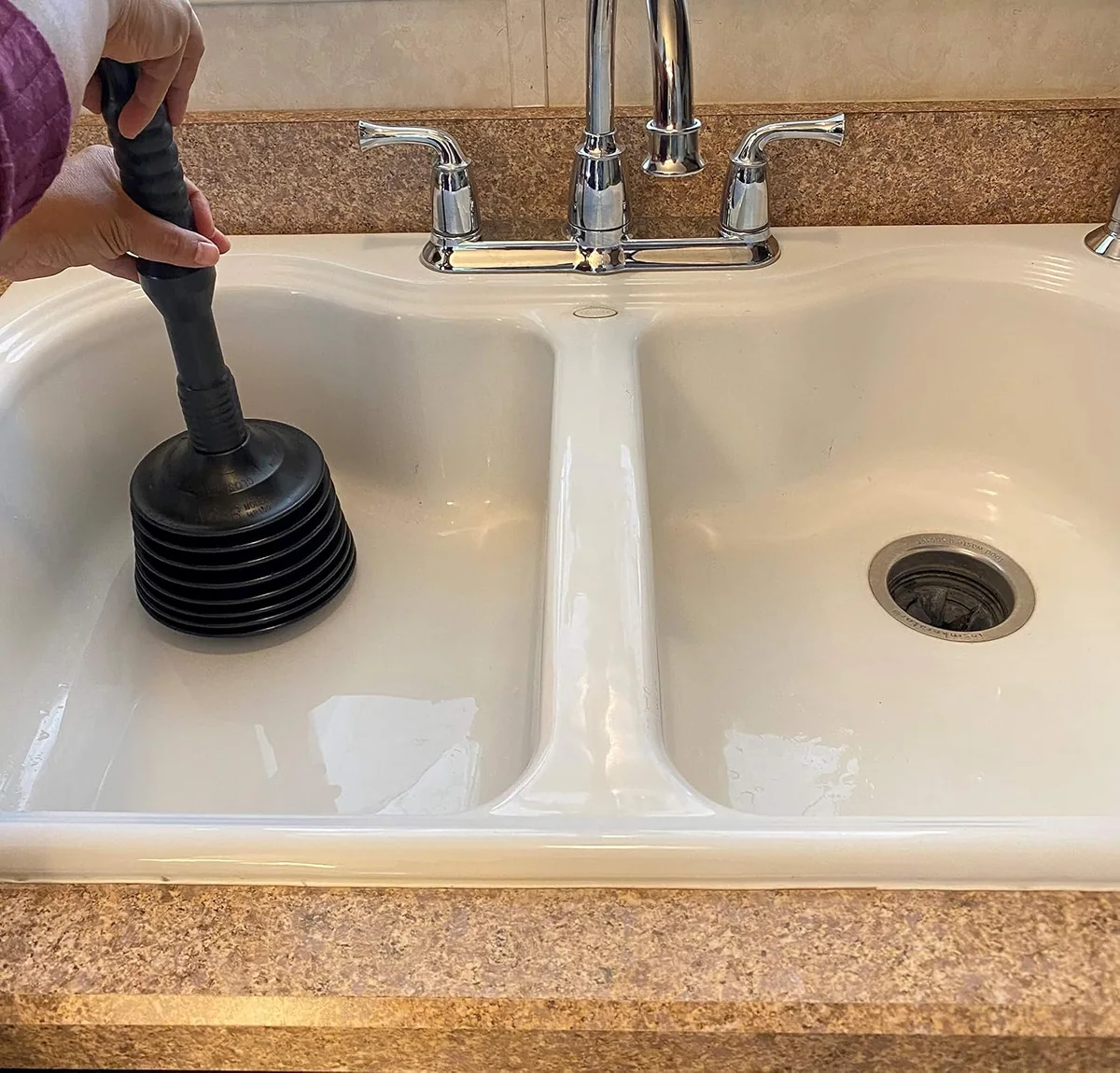
When not to plunge
Don't plunge if you've poured chemical drain cleaner into the bowl. Every stroke throws bowl water up, and with caustic cleaner in it, that water can hurt you. Poison Control puts the risk plainly:
If cleaner is already in the bowl, leave the plunger in its bucket and call a plumber, and tell them what you poured in. Don't plunge after a solid object went down either, like a toy, a phone or a bottle cap. The push drives it deeper into the trap, where it may take pulling the toilet to get it out.
Drain cleaners that contain corrosive or caustic chemicals can cause pain, irritation, and burns when they come into contact with skin.
When to call a plumber
Call if water rises in the tub or shower when you plunge or flush. That points to a blockage in the shared line, past the reach of any hand plunger.
Call too if three rounds of strokes change nothing, or if the same toilet clogs every week. A clog that keeps coming back can mean trouble in the vent or the drain line, and a plunger only buys you time.
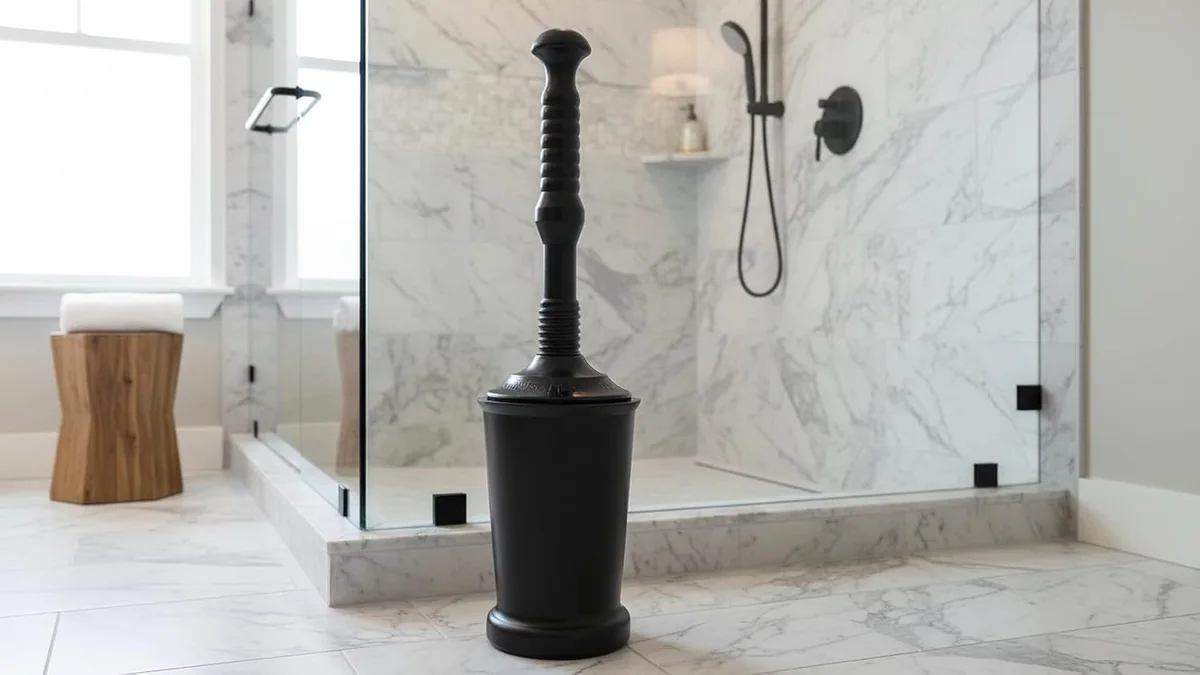
After the job, rinse the plunger with a clean flush and shake the water out of the folds. Stand it in its bucket or over the bowl to drip dry, so it's ready for next time.
Models this guide mentions
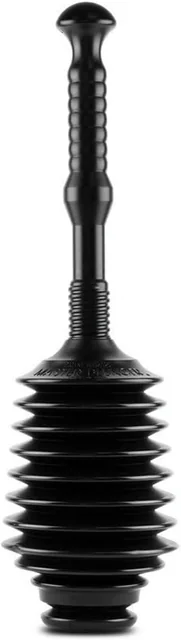
from$15.49
See options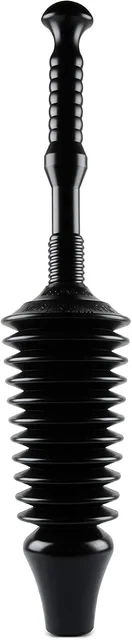
MP1600
Master Plunger 1600
For 1.6-gallon low-flush toilets
- 8 cups
- Air relief valve
- Extended funnel nose
- 2 options
from$15.99
See options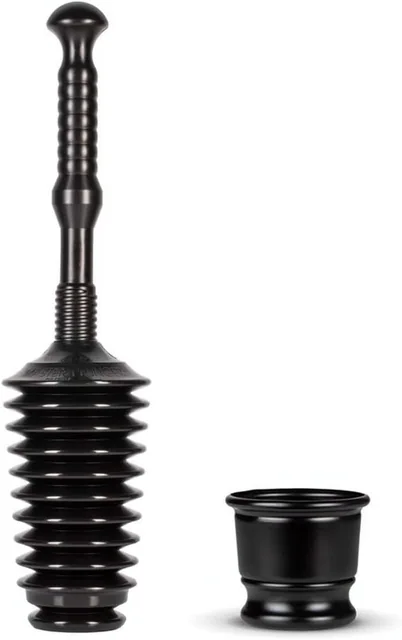
MP500
Master Plunger 500 Kit
All-purpose plunger with a bucket
- 8 cups
- Air relief valve
- Tri-level nozzle
- 4 options
from$15.77
See optionsPublished 28 September 2026. Outside sources were read on the date shown with each quote. See all sources.