How-to guide
Bellows plungers vs. cup plungers
Both kinds push on a clog. The difference is what they push with, and how much of it they move.
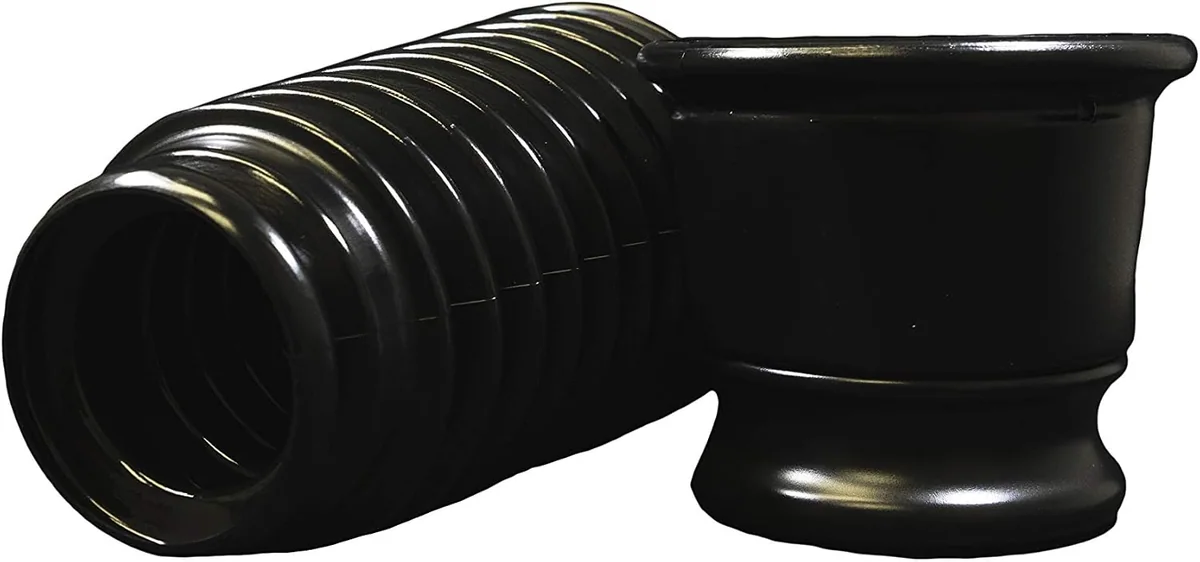
How a cup plunger works
A classic cup plunger is a rubber dome on a stick. You press it over the drain, the dome flattens, and whatever is inside gets pushed toward the pipe.
The catch is that the dome often holds air, and air squeezes. Part of your push goes into squeezing it. The soft rubber also flexes, and on a toilet outlet a flat cup can slide or leak around the edge.
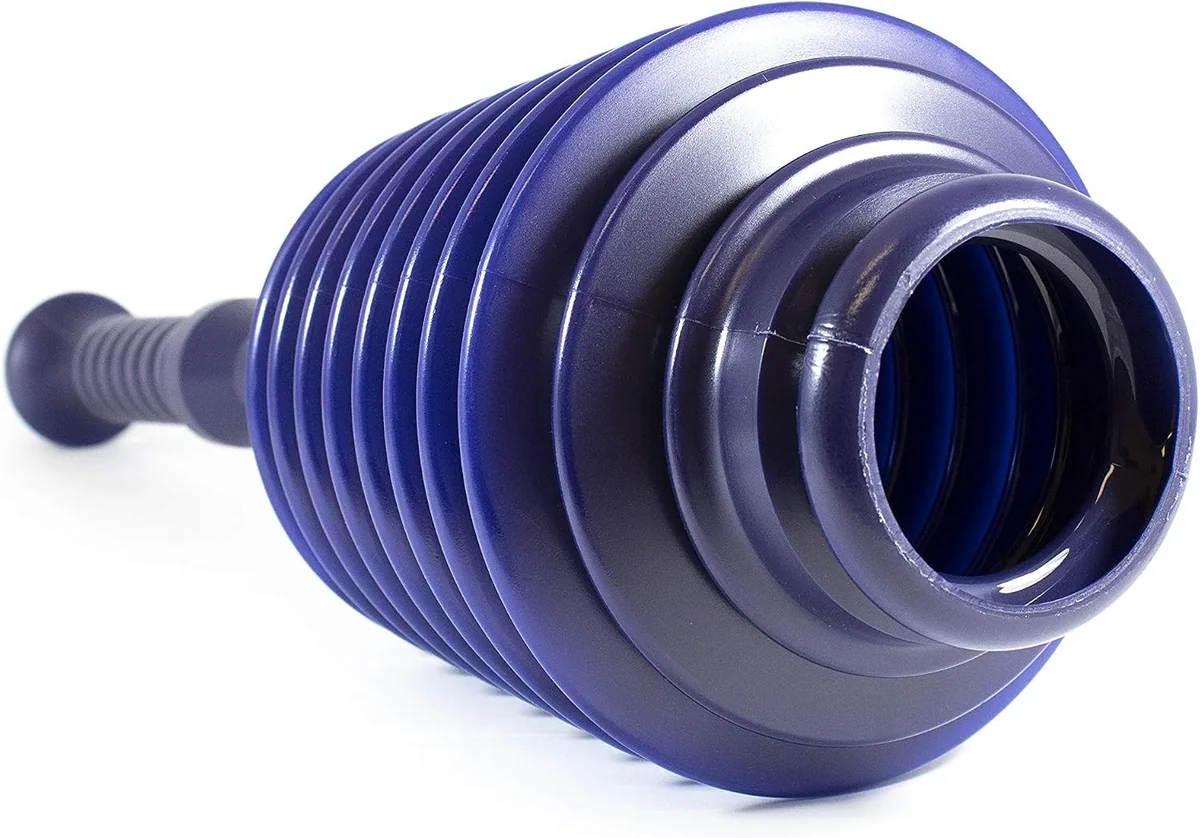
How a bellows plunger works
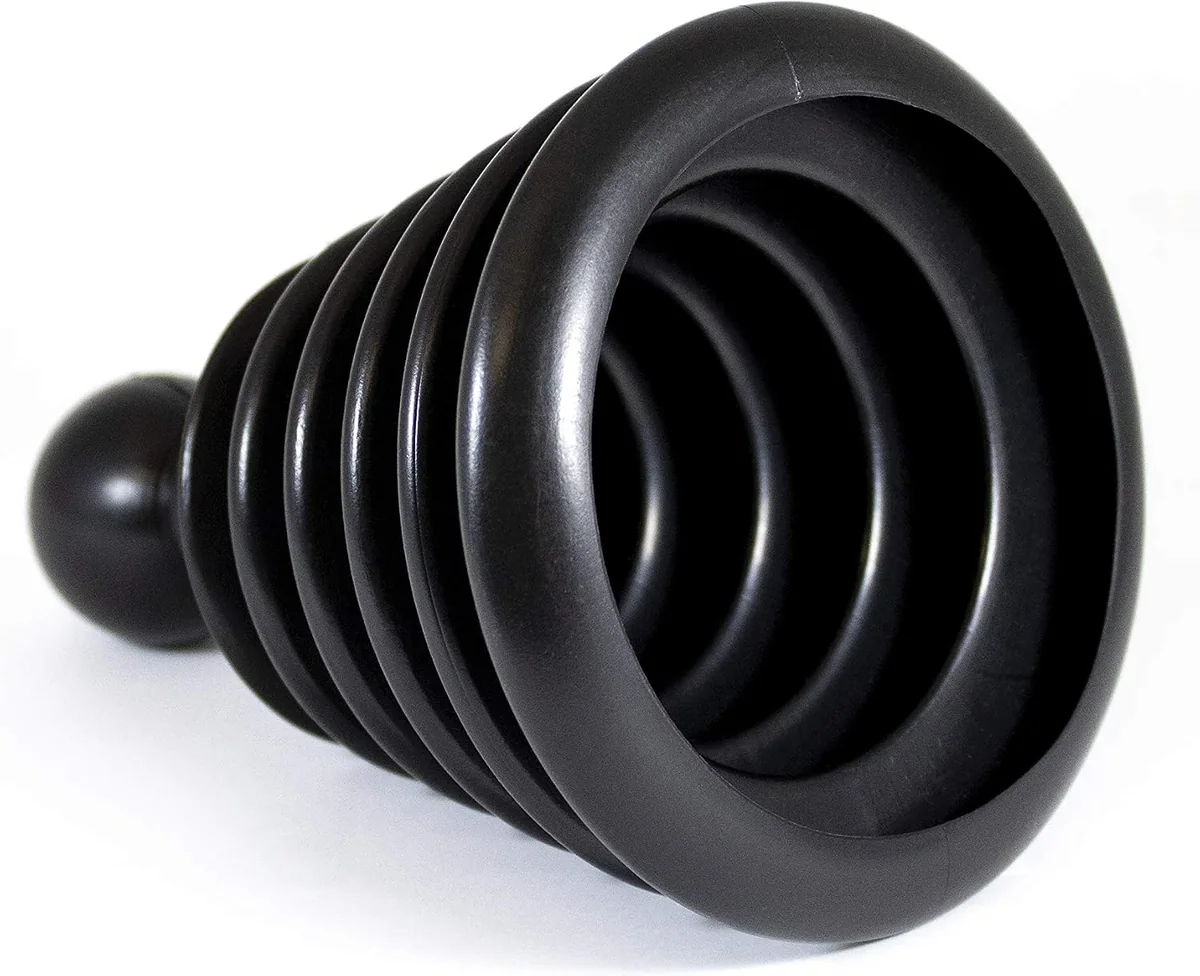
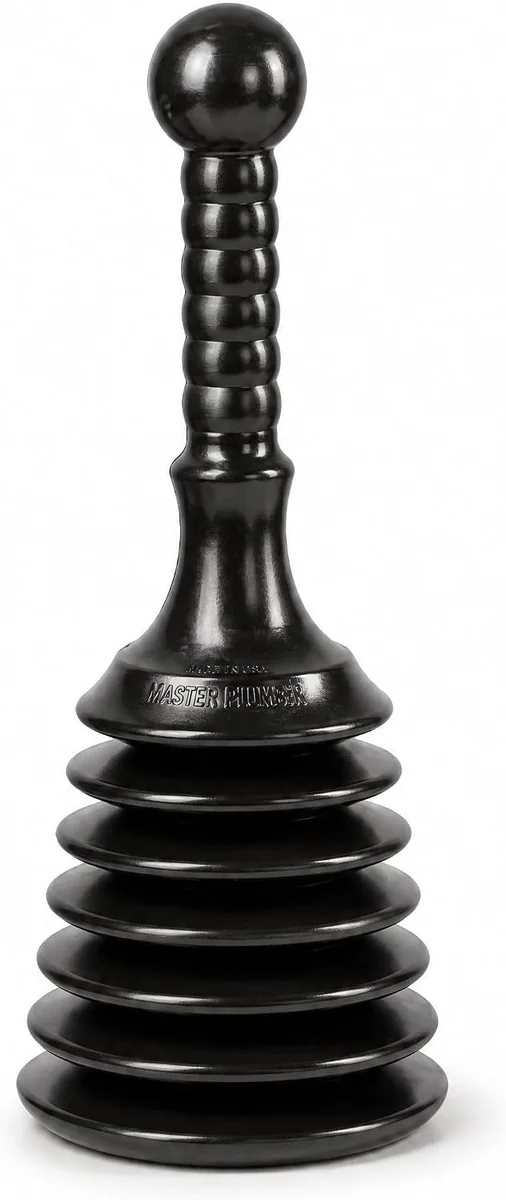
A bellows plunger has folds like an accordion, with a nose or a mouth at the end. You fill it with water first. When you press, the folds close and push that water into the drain as one solid slug.
When you pull up, the folds open and draw water back. The clog gets pushed and then pulled, and that back-and-forth loosens it faster than pushing alone. The hard plastic holds its shape, so your push goes into the pipe instead of into the plunger.
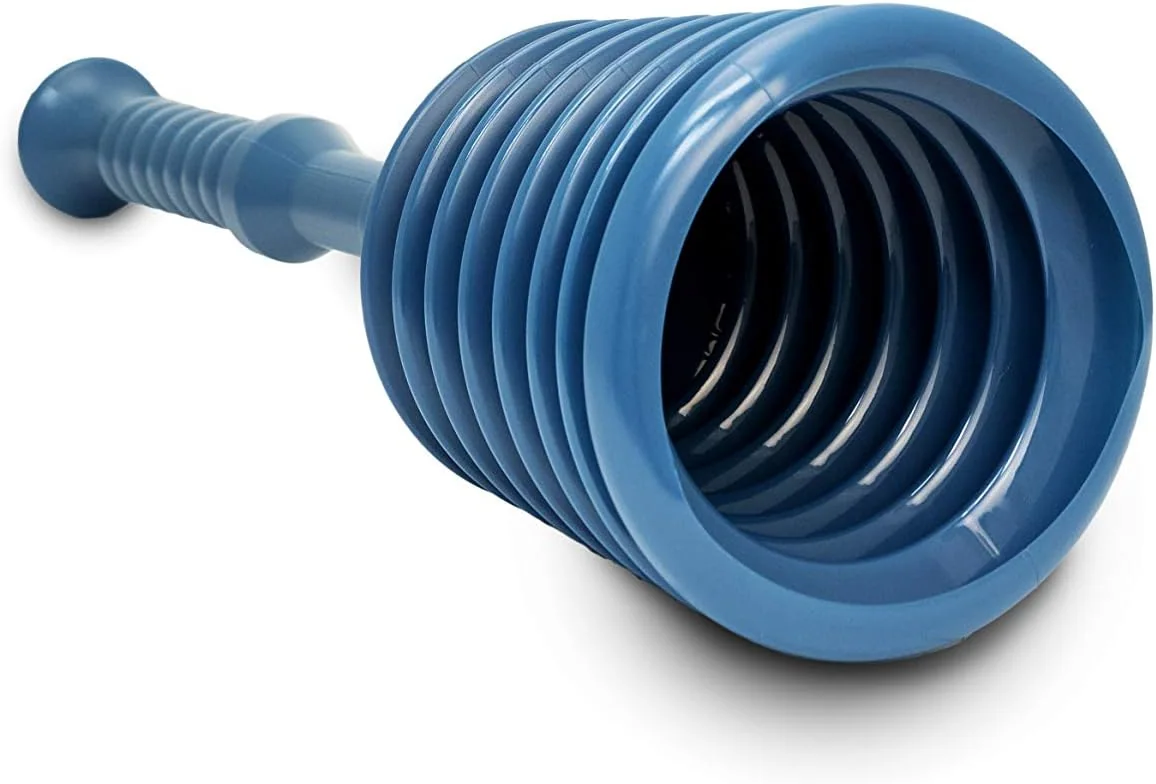
What cups of water displacement means
The number given for each Master Plunger model is the volume of water it moves on one full stroke. More cups means more water hitting the clog each time you push.
The Mighty Tiny moves 2 1/4 cups and the Shorty moves 4. The MP500, the MP1600 and the MP500 & Brush Set move 8 cups each, and the MP100 moves 10. The wide-mouth MP200 is built for a different job, covering a tub, shower or floor drain in one piece.
Cup plungers don't usually come with a matching figure, so there's no fair number-for-number comparison. What you can compare is how they behave: a bellows plunger full of water moves all of it, and a cup with air inside moves only part of your push.
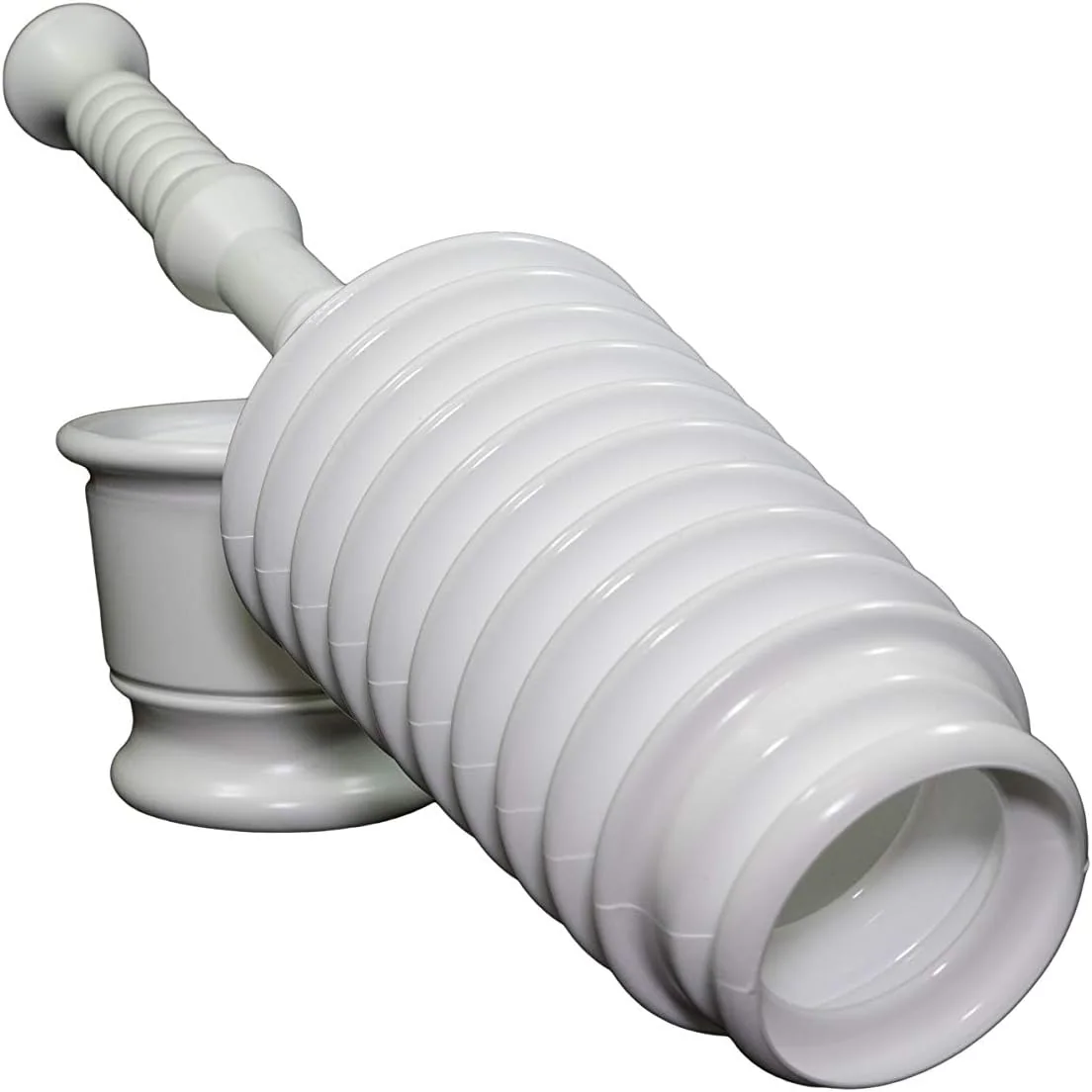
More cups isn't always better
A 10-cup plunger in a bathroom sink sends water out through the overflow before it clears anything. A 2 1/4-cup plunger in a toilet won't move enough water to shift a wad of paper.
So match the plunger to the drain. For toilets, go with 8 to 10 cups and a nose that fits the outlet. For kitchen sinks, tubs and showers, the 4-cup Shorty or the wide-mouth MP200 will do the job.
For a bathroom sink with a low faucet and a pop-up drain, the Mighty Tiny fits where the others can't. It's 7.25 inches tall, and it also suits the tight cabinets in an RV.
Where a cup still does the job
A rubber cup forgives a sloppy angle, since its soft edge bends to meet the surface. Bellows plungers are hard plastic with no rubber rim, and owners who got poor results often describe a seal that wouldn't hold.
Bellows plungers also take a minute to learn. You have to let the air out before the first hard stroke, or the plunger sprays. The folds hold water and waste after use too, so they need a rinse and a shake every time.
Who should skip a bellows plunger
If you plunge once every few years and a cup has always worked, you may not need to switch. If your toilet has a square or deep outlet, look at the nose shape before you choose, because a round tip won't seal on every bowl.
And no plunger of either kind fixes a blocked main line, a jammed disposal or a pipe full of roots. If water comes up in another drain while you plunge, or nothing changes after three rounds, stop and call a plumber.
Models this guide mentions
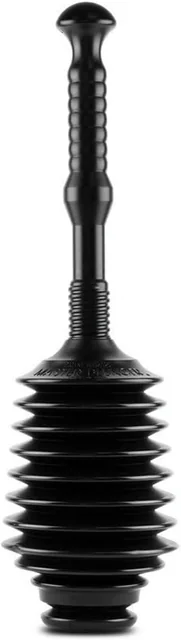
from$15.49
See options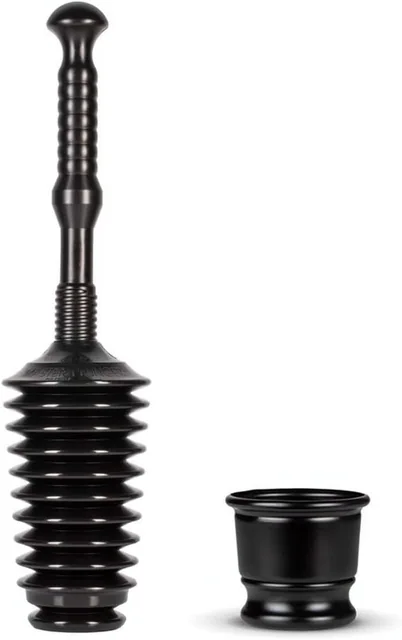
MP500
Master Plunger 500 Kit
All-purpose plunger with a bucket
- 8 cups
- Air relief valve
- Tri-level nozzle
- 4 options
from$15.77
See options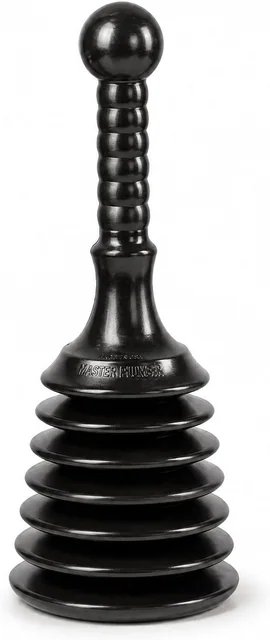
from$11.99
See options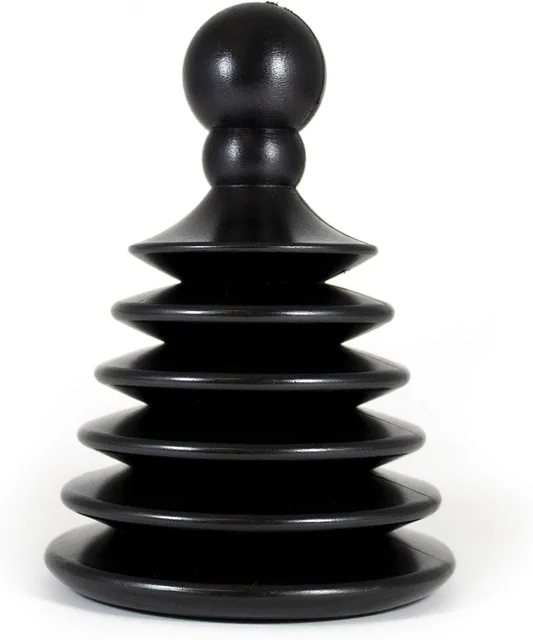
from$12.99
See optionsPublished 28 September 2026. Outside sources were read on the date shown with each quote. See all sources.